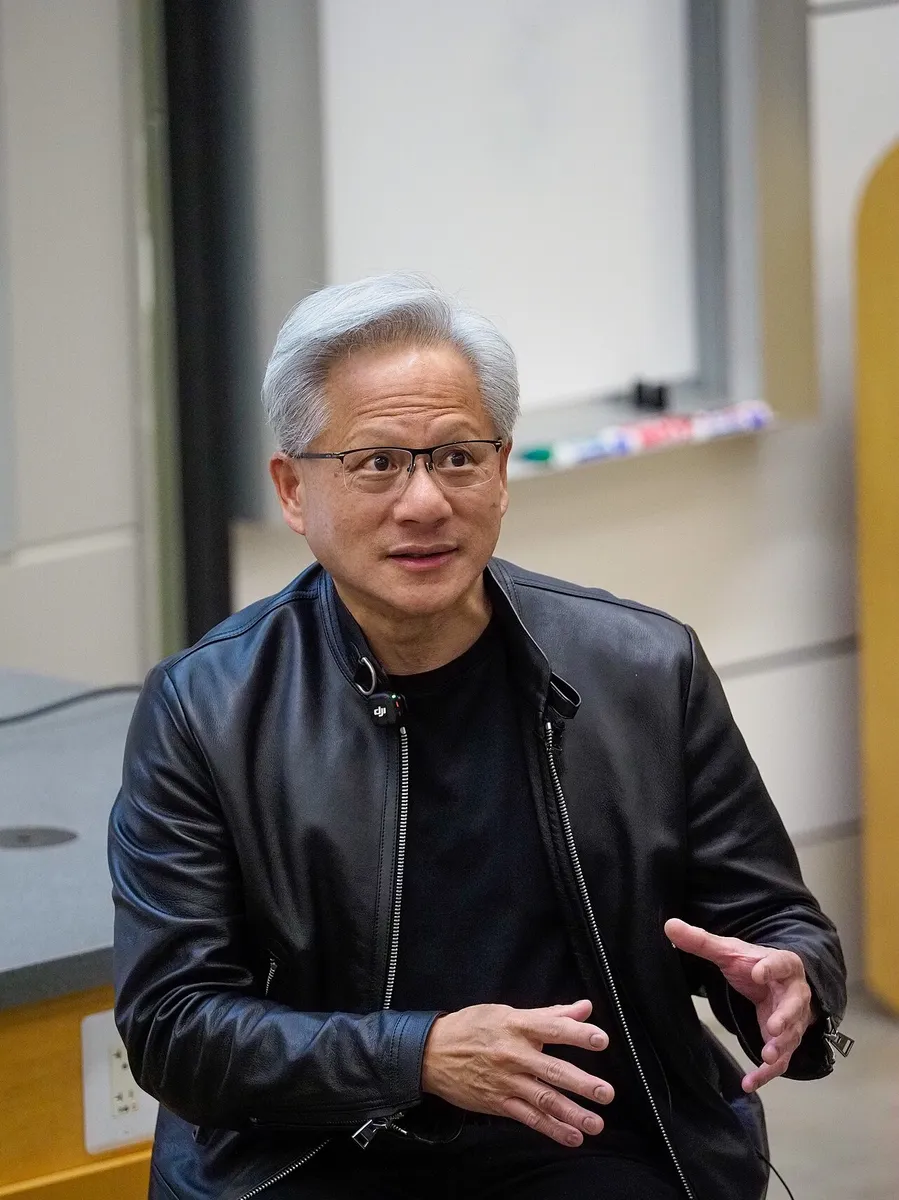
Nvidia's board said on Sunday, November 8, 2026, that it had opened an investigation into Jensen Huang, the company's founder and chief executive, hours after Huang acknowledged to employees that he had an extramarital relationship with a woman US intelligence agencies believe worked for Chinese intelligence.
The inquiry will be run by a committee of independent directors with outside counsel, Nvidia said. Huang remains chief executive while it proceeds. The board said it has no reason to believe that national security or Nvidia's trade secrets were compromised, that it will nevertheless review all the information available to it, and that it retains confidence in Huang and his leadership team.
In an email to staff, Huang confirmed the relationship and apologized to his wife and children, saying there was no excuse for what he had done.
Who the woman is, and what is alleged
The woman is Alice Huang, also known as Huang Le. She is no relation to Jensen Huang. The New York Times first reported on October 29 that she had sought to build close ties with the Nvidia chief in order to learn about the company's technology. The Financial Times later reported that the US intelligence community believes the relationship was romantic and that she was working for Chinese intelligence, with it unclear whether she was recruited before or after the business relationship began.
She was a senior executive at Megaspeed, a firm incorporated in Singapore in 2023 that became one of Nvidia's largest customers, buying roughly $4.8 billion in equipment. Megaspeed is separately accused of routing about $2 billion worth of AI chips into China through Speedmatrix, a subsidiary it set up in 2024 with offices in Johor, Malaysia — a volume that raised questions about how a company of that size could place orders of that scale.
Accounts of her earlier career have not held up uniformly. She was described as a former television journalist at Hunan TV and CCTV, but a Hunan TV executive said the station had never heard of her and no CCTV profile has surfaced; she was later reported to have worked in HSBC's private banking division and as a vice president at CITIC Securities.
The denials
Nvidia rejects the espionage allegations. The company says Megaspeed has no ties to the Chinese state, and that Huang meets thousands of customer executives every year in exchanges that involve ordinary commercial information rather than trade secrets or classified material.
The Chinese Embassy in Washington denied the spying allegations, and Beijing has called them groundless smears.
Congress wants answers
Three House Republicans — John Moolenaar, Brian Mast and Rick Crawford — have asked Huang to testify on November 18 on whether US national security was put at risk. Senator Elizabeth Warren, a Democrat, said Huang and the board owe Congress an explanation and used the case to push for pending legislation tightening exports of advanced technology to China.
The timing is awkward in another way. Huang has worked closely with President Donald Trump since 2025, and in August 2025 the administration said it would take a 15 percent cut of certain Nvidia chip sales to China. Asked whether Huang would travel with him to the APEC summit in China, Trump was noncommittal, calling him a "fine person" and an "honourable guy" who "probably has an excuse for it."
The market backdrop
The investigation lands in a week Nvidia's shareholders will not remember fondly. AI-linked stocks, Nvidia among them, fell after the Republican losses in last week's midterm elections, and Nvidia shed $450 billion in market value in a single trading session before recovering 4 percent of that on Friday.
For a company whose chips are the chokepoint of the AI build-out, the question the board has set itself is narrow — whether anything was compromised — but the one Congress is asking is broader: how a small Singaporean reseller came to be among the biggest buyers of the most strictly controlled hardware in the world.
Reporting from Al Jazeera and Reuters, with the original allegations reported by The New York Times and the Financial Times.