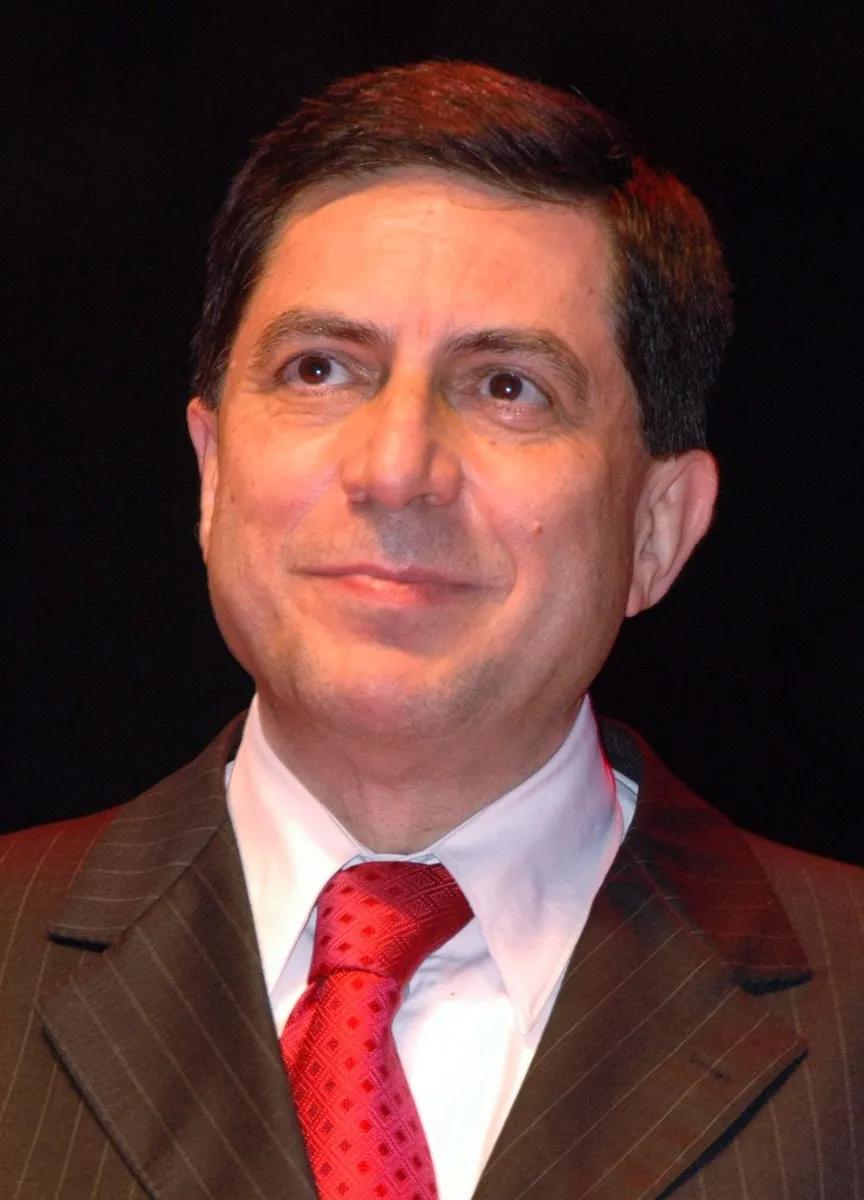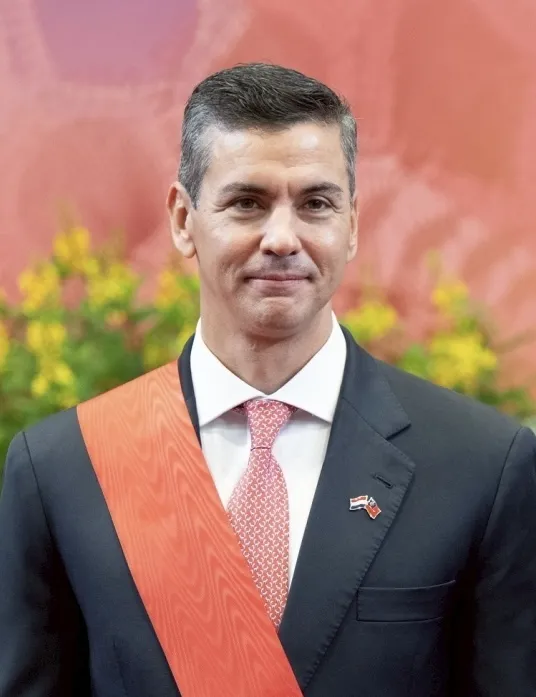
Former Paraguayan president Santiago Peña entered the Prisión Militar de Viñas Cué (Viñas Cué military prison), in Asunción's Botánico neighbourhood, shortly after 3pm on Monday, 16 November 2026, where he was registered as inmate number 53. He arrived handcuffed and wearing a bulletproof vest, according to reporters stationed at the prison gate; one account of the transfer adds that he also wore a helmet.
The move ends the ten days Peña spent at the Regimiento Escolta Presidencial (REP), the military unit that guards the head of state and that took him in when he was detained in November, hours after the Senate removed him from office. It was the discovery of exercise equipment at that barracks that prompted the order to send him to an ordinary cell in the military prison system.
The judge's order
The transfer was ordered by criminal guarantees judge Osmar David Legal Troche, who asked the Suprema Corte de Justicia Militar (Paraguay's supreme military court) for "the immediate transfer" of the defendant to Viñas Cué. The ruling does not change his legal status: it simply enforces, in a different facility, the pre-trial detention ordered on 7 November.
In the same document, the judge ordered that Peña remain at the court's disposal, that prison authorities take all necessary security measures to protect his life and physical integrity, that they report in detail on the protocol governing his stay, and that he be held separately from the other defendants in the case.
The privileges at the barracks
The privileges are what drove the decision. Equipment for physical exercise was installed at the REP, a fact confirmed by Defence Minister Óscar González, and it ended up costing the unit's commander his post.
President Pedro Alliana dismissed José David Dayub, who had led the regiment since 20 October, and instructed González to carry out the removal. González said Dayub himself confirmed to him that the equipment had been installed at the facility.
The ueno bank looting case
Peña is being prosecuted for breach of trust, administration for personal benefit and criminal association. The case is titled "Santiago Peña Palacios y otros s/ Lesión de confianza" and concerns the alleged looting of ueno bank.
The Banco Central del Paraguay (Central Bank of Paraguay) ordered the bank's resolution — its winding-down procedure — on 3 November 2026, after detecting serious financial problems. The lender claimed more than 2.94 million clients and managed funds belonging to the Instituto de Previsión Social (IPS), Paraguay's social security institute, and to four other pension funds, as well as money held by state agencies.
The investigation covers operations before the collapse and also reaches executives and supervisory authorities: according to Infobae, several people linked to the bank have been detained, and the president of the Banco Central del Paraguay, Carlos Carvallo, along with three former directors, are subject to judicial measures.
From impeachment to pre-trial detention
The Senate found Peña guilty of poor performance of duties in the impeachment trial of 6 November 2026 and removed him from the presidency. He was detained hours later, and on 7 November the court ordered his pre-trial detention.
On that same 6 November, Senate president Basilio Núñez swore in Pedro Alliana as president of the republic in a solemn joint session of both chambers, to complete the 2023-2028 term. Congress elected Antonio Barrios as vice-president unanimously by show of hands, and the Senate approved his resignation from his Senate seat, which Guadalupe Aveiro then took.
"I don't want anyone lukewarm on this mission, I want results," Alliana said on taking office. In the same speech he announced he would order immediate measures to compensate savers hit by the financial collapse, with particular attention to those on the lowest incomes.
The sequence — removal by impeachment, pre-trial detention and transfer to a military prison in little more than a week — has no recent precedent in the country: the 2023-2028 term will end with a different president from the one elected in 2023, and with his predecessor prosecuted over the failure of a bank that managed the pension savings of millions of Paraguayans.
With information from ABC Color, Última Hora, Infobae and the Senate of Paraguay.