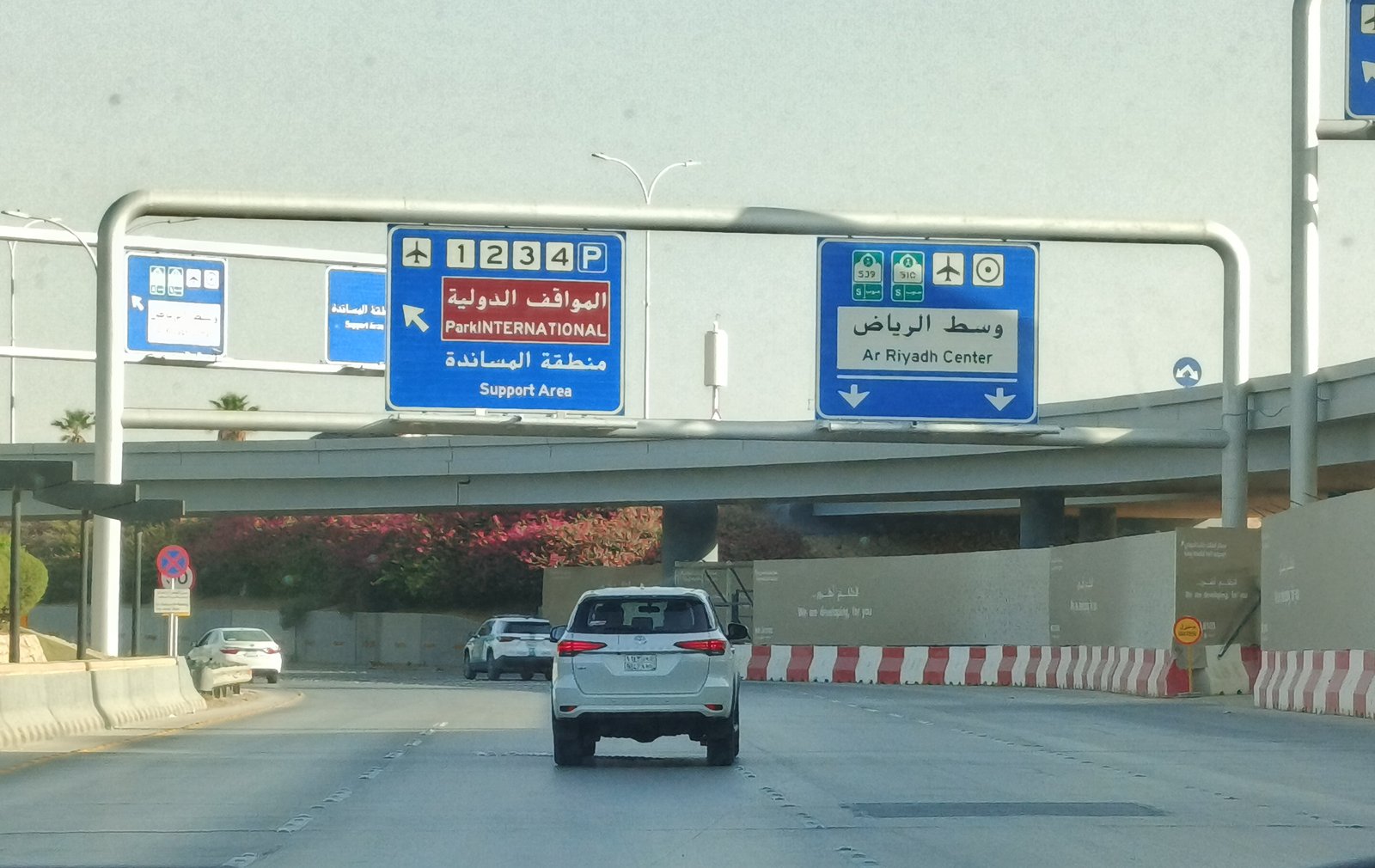
The Saudi-led military coalition said it intercepted and destroyed a ballistic missile fired by the Houthi group at Riyadh at dawn on Saturday. It was the first time air-raid sirens sounded in the Saudi capital since the war in Yemen escalated again in July, ending four years of relative calm following the April 2022 truce.
Coalition spokesman Major-General Turki al-Maliki said air defences "intercepted and destroyed" the missile aimed at the capital and that the remaining attempts were thwarted. According to the Saudi statement, there were no casualties or damage.
Residents near King Khalid International Airport, however, reported explosions and a column of black smoke over the terminal's fuel tank area. The tracking service FlightRadar24 briefly listed the airport at its maximum disruption level before traffic returned to normal.
What the Houthis say
The group's military spokesman, Yahya Saree, said the offensive used "cruise and ballistic missiles as well as drones", and that it struck "sensitive sites" in the Saudi capital and Saudi Aramco facilities in Yanbu, on the country's western coast. Saree also claimed attacks on Bisha, Taif and Farasan.
The Associated Press said it could not independently verify the group's claims. The two accounts — the Saudi one, of a complete interception, and the Houthi one, of fires started — have not been reconciled by any independent source as of publication.
A two-week escalation
The attack on Riyadh is the high point of a rapid sequence:
- July 2026 — the truce brokered in April 2022 collapses after the Houthis allow an Iranian aircraft to land, defying Saudi control of Yemeni airspace.
- September — the group advances along the Red Sea coast, takes the port city of Mokha and comes to control the Bab al-Mandab strait.
- Wednesday (16th) — Saudi Arabia accuses the Houthis of trying to hit Mecca with a drone; the group denies it.
- Thursday (17th) — drone debris causes the first civilian death on Saudi soil in this phase of the war.
- Saturday (19th) — the missile aimed at Riyadh.
Regional officials told the AP that Saudi Arabia faces a shortage of interceptor missiles and has asked France, the United Kingdom, Pakistan and Egypt for air-defence support. The United States, a close ally of Riyadh, approved the sale of 48 F-35 fighter jets to the kingdom in a contract valued at $24.3 billion, and has signalled it is not currently in open conflict with the Houthis.
The US State Department issued a security alert for the region, saying the confrontation "has the potential to escalate rapidly". Turkey voiced support for Saudi Arabia in the face of the attacks.
The human cost
The United Nations counts more than 112,000 people displaced since fighting resumed, and around 3,000 who have crossed into Djibouti. Analysts quoted by international media assess that "the only way this ends is through negotiations", but describe both sides as locked in an escalation trap.
With information from Al Jazeera, NPR, the Associated Press, The Times of Israel and Euronews.