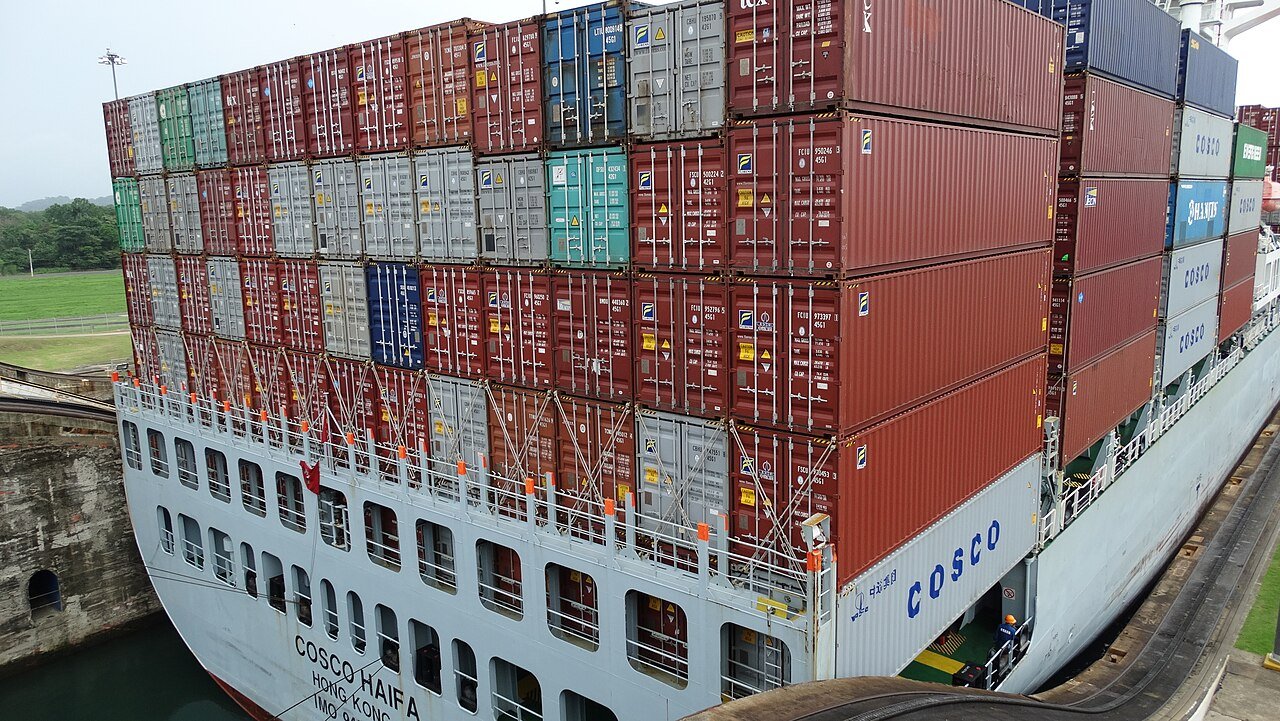
The Autoridad del Canal de Panamá (ACP, the authority that runs the Panama Canal) will keep an average of 32 ships transiting per day and a maximum draft of 48 feet (14.63 metres) for Neopanamax vessels through December, after September's rains gave some slack back to the reservoirs that feed the interoceanic waterway.
The decision means postponing a sixth adjustment already on the calendar: the cut of the draft to 47.5 feet, planned for October, is off for now.
Three weeks of rain after four months of deficit
The first 21 days of September brought rainfall above the historical average in the canal watershed, a turn after four consecutive months of deficit tied to the current El Niño.
The effect shows in the levels: on 25 September, Gatún Lake — the main reservoir, which also supplies drinking water to much of the country — stood at 84.64 feet, and Alhajuela Lake at 242.92 feet.
"If we have a very good October and November"
The ACP's administrator, Ilya Espino de Marotta, tied the relief to what happens in the coming weeks: "If we have a very good October and November," she said, the canal could avoid further transit reductions and enter the dry season in better shape than in 2023.
That reference is not incidental. During the water crisis of 2023 and 2024 the ACP had to cut transits to 24 ships a day, a limit that pushed freight rates up and diverted cargo to other routes.
The authority's hydrology manager, Ayax Murillo, said conservation measures were triggered early and saved roughly 2.5 million cubic metres of water a day, through greater efficiency in lock operations and water-recycling systems.
Río Indio, the 50-year bet
While this year hangs on the rain, the ACP is pressing ahead with the project meant to take that dependence away. The Río Indio scheme, approved in 2025, calls for an investment of some $1.5 billion in a main dam and three auxiliary dams, with an expected 50 years of water security.
For the project's development phase, the authority earmarked $82 million in fiscal year 2027.
The underlying reading is that the canal is operating on borrowed room. The 32 daily transits are not the waterway's full capacity but the point at which the ACP managed to stabilise operations without draining its reserves: the quota holds through December, and what comes after is decided by the rains of October and November.
With information from the Autoridad del Canal de Panamá, Infobae and Prensa Latina.