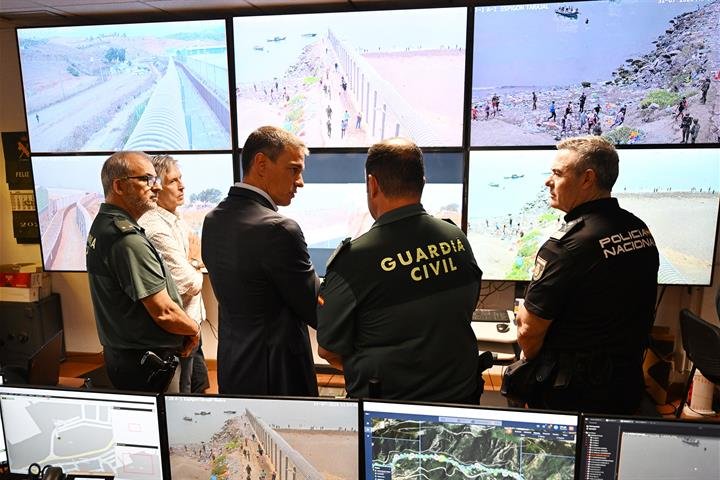
Spain's Policía Nacional (National Police) and Guardia Civil (Civil Guard) moved about 1,700 migrants off Trampolín and Benítez beaches in Ceuta on Friday and transferred them to a tent camp set up in the port area. The operation began shortly after 6.30am local time and was finished by around midday.
It did not go smoothly. When the groups coming from the two beaches converged, a crush developed at Benítez beach and officers fired into the air as it became harder to hold the crowd back, according to Euronews. Many of the migrants had been sleeping rough for about six weeks, waiting for a place in a shelter.
The numbers do not add up
The central problem with the operation is arithmetic. The camp at the port holds about 1,700 people, while the authorities' own estimates put more than 4,000 migrants on the two beaches alone.
It is the fifth temporary reception site opened by the Spanish government since the crisis began, and together they offer some 6,000 places. The government says the new facilities provide showers, toilets, meals and beds.
The choice of the port is contested. Ana Alarcón, spokeswoman for the Sindicato Unificado de Policía (Unified Police Union), said the "port is not a safe place" and warned about who would answer for any incident. A court rejected the union's request to halt the transfer.
The background: 30 July
The crisis began overnight from 30 to 31 July, when more than 70,000 people entered Ceuta from Morocco. Most went back in the following days, but thousands stayed.
The counts differ: the local government estimates about 13,000 people remained in the city, well above the figure given by the central government. Ceuta has around 80,000 residents in 18.5 sq km — a ratio that helps explain why the issue has dominated Spanish politics ever since.
Each migrant has to be identified individually before any decision on an asylum claim or a return, and thousands are minors, entitled to special protection under Spanish law. It is that slow work that explains why the situation has dragged on since July.
A political fight
Handling of the crisis pits Pedro Sánchez's Socialist government against the local administration, run by the Partido Popular. After Ceuta's port authority refused to cooperate, the central government took control of the port facilities — a decision criticised by the right and the far right.
The local government's vice-president, Alejandro Ramírez, accused the central government of improvising and pointed to the jump in interventions at the port, from 80 to more than a thousand in fifty days.
With information from Euronews, O Tempo, O Povo and La Moncloa.