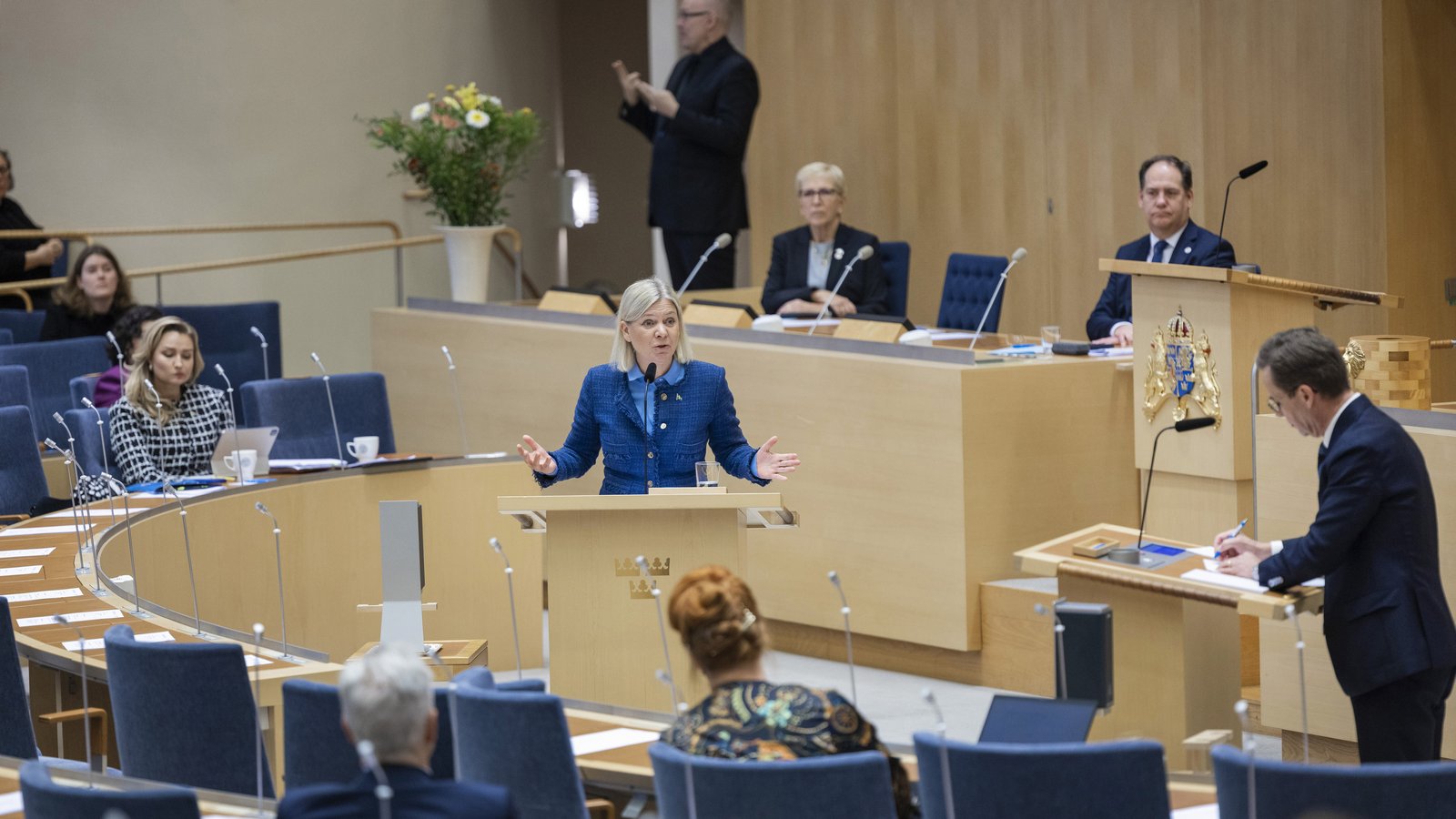
Sweden's prime minister, Ulf Kristersson, announced on Thursday that he is stepping down, hours after the definitive vote count confirmed that the left-leaning opposition had won a majority in the Riksdag (the Swedish parliament). He made the request in a letter to the speaker, which he posted on the social network X.
"I am henceforth requesting that I be relieved of the office of prime minister to allow that work to start immediately," he wrote, referring to the formation of a new government.
The closest election in decades
Sweden voted on 13 September, but the result was not settled until four days later, once early ballots and votes cast abroad had been counted. The final score: 176 seats for the bloc of Social Democrats, Left Party, Greens and Centre Party, against 173 for Kristersson's bloc — Moderates, Sweden Democrats, Christian Democrats and Liberals. There are 349 seats in all.
The gap between the two blocs came to about 50,000 votes in a country of 10.6 million people. A swing of two seats would have reversed the outcome.
The far right slips
The Sweden Democrats, the anti-immigration party that had supported the government without joining it since 2022, took 17.5% of the vote, against 20.5% four years earlier. It is the first time the party has lost ground since it entered parliament in 2010. It remains the third-largest force in the Riksdag.
The Social Democrats, for their part, are still the largest single party, with 99 seats.
A three-seat majority and four parties that disagree
Magdalena Andersson, who was prime minister for a little over two months in 2022, is the favourite to return to the job, but no appointment has been made. First she has to stitch together a deal between parties that rule each other out: the Left Party is demanding cabinet posts, and the liberal Centre Party opposes giving them any.
The parliamentary vote on a new prime minister is expected on 29 September at the earliest. Until then, Kristersson stays on at the head of a caretaker government.
It is worth noting what the score says and what it does not: a three-seat majority is enough to form a government, but not enough to lose a vote. Any one of the four parties in the winning bloc can bring down a division on its own.
With information from Al Jazeera, the Associated Press and Sveriges riksdag.