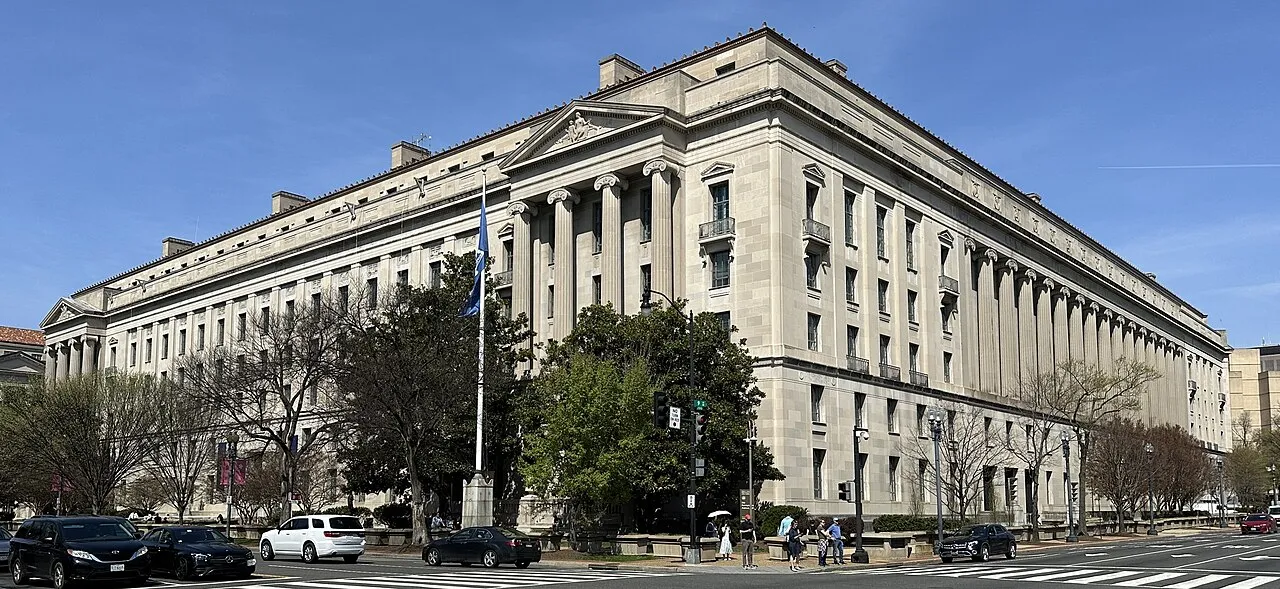
The Justice Department has opened an antitrust investigation into the five television networks that share White House pool duty, examining whether their decision to stop covering President Donald Trump together amounted to an illegal boycott.
ABC, CBS, CNN, NBC and Fox News learned of the inquiry on October 9. The investigation sits with the department's Antitrust Division, and the legal theory it is testing is the Sherman Act of 1890 — the statute written to stop competing firms from acting as one.
A department spokesperson said the five outlets "proudly boycotted covering White House events," and that the Antitrust Division "is simply investigating to determine whether these news organizations have violated the antitrust laws." The department also offered the general proposition it is working from: group boycotts among commercial competitors can violate the Sherman Act.
What the networks actually did
The five networks are the primary television pool at the White House. They split the cost of covering the president, take turns organising that coverage, and share the resulting footage with everyone else — an arrangement that exists precisely because no single network can staff every presidential movement.
In September they suspended that coverage, and declined to supply a replacement, after the White House pulled the credentials of reporters from CNN, Politico and MS NOW. The revocations came on September 19, with the administration saying that covering the president was a "privilege — not a right."
A second suspension followed later. On days when CNN was the pool's designated video provider, the government barred it from travelling with the president aboard Air Force One — which, under the pool's shared-feed arrangement, meant no network had video.
The case that produced it
The three excluded outlets sued, arguing the ban violated the First Amendment and was retaliation for their coverage. Judge Timothy Kelly, of the federal district court in Washington, found the exclusion likely unconstitutional and ordered access restored; the White House reinstated the credentials on September 24.
That order was temporary, and the fight over making it permanent is still live. On October 8, Kelly extended his restraining order through October 13 and said he expected to rule on a preliminary injunction by that Tuesday. The distinction matters procedurally: a temporary restraining order cannot be appealed, while a preliminary injunction can — and the Justice Department has asked that any injunction be confined to restoring the reporters' hard passes and suspended during an appeal.
The administration's position is that the three outlets failed to meet the "standards of professionalism and decorum expected of those given access to the White House Complex." Lawyers for the outlets call the ban an "unlawful assault on the most fundamental First Amendment freedoms," and have since sought an emergency hearing accusing the White House of breaching Kelly's order. MS NOW has argued that the administration's claim of due process is undercut by its own paperwork: the letters invoking national security were issued a day after the lawsuit was filed.
Two proceedings, one dispute
The result is an unusual pincer. In one courtroom the government is defending its decision to exclude three news organisations from the White House. In another building, its Antitrust Division is examining whether the news organisations that objected broke the law by objecting in concert.
Antitrust law has been applied to boycotts by competitors before, including in cases where the participants said they were protesting rather than colluding. What is new here is the subject of the boycott: not a price or a supplier, but coverage of the president, withheld from the president.
Reporting from Reuters, Adweek, JURIST and Democracy Now!; the investigation was first reported by The New York Times.