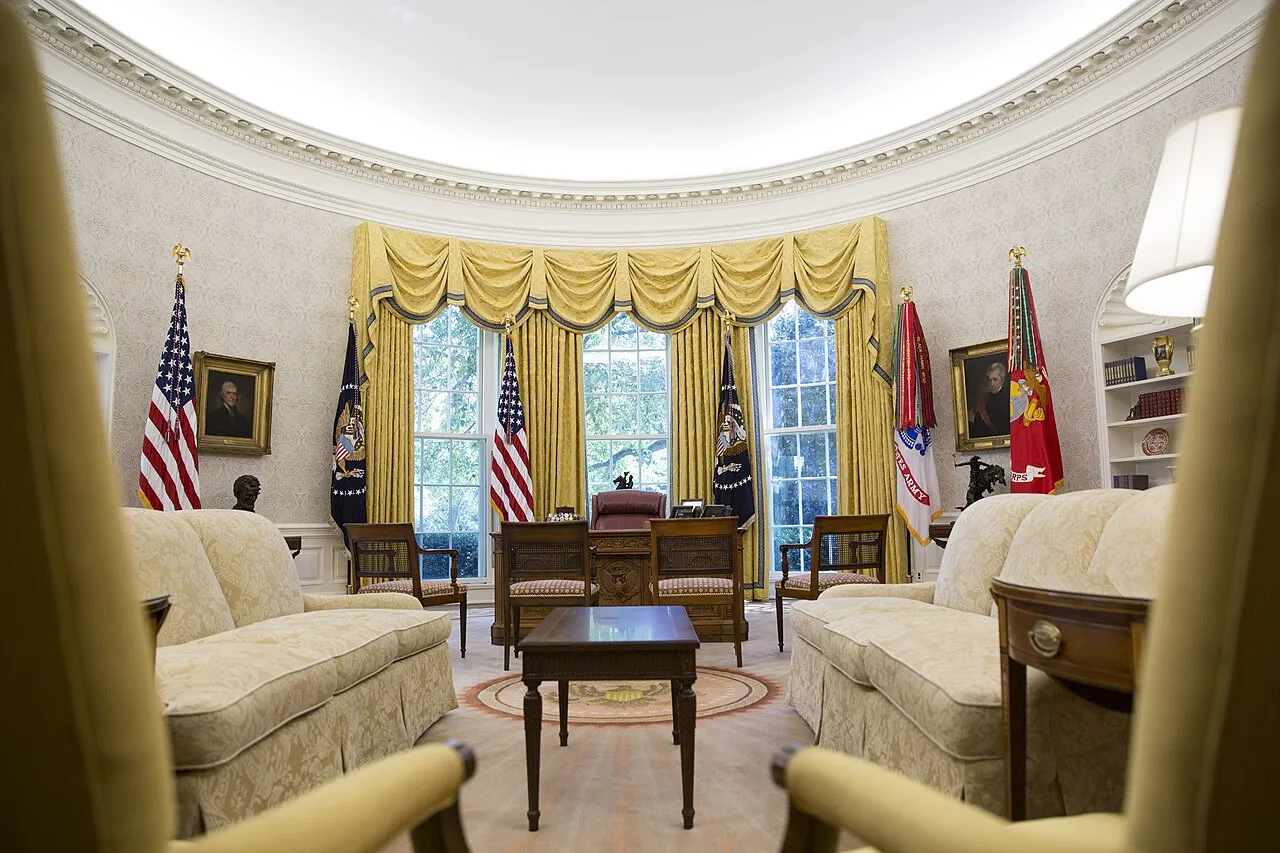
President Donald Trump signed a proclamation on Thursday, November 5, 2026, establishing the Oval Office National Monument — a designation that covers the Oval Office itself, the Outer Oval Office and the Cabinet Room.
The White House said the room has served as the president's principal working office for "almost a century" and "merits more recognition and protective management" than its existing status as a National Historic Landmark provides. The proclamation was issued under the Antiquities Act, the 1906 law presidents have used for more than a century to protect federal lands and structures.
What the document requires
It directs the Secretary of the Interior to develop and implement a management plan, working with the executive departments, agencies and offices involved and coordinating with the Committee for the Preservation of the White House and other advisory bodies. Before any action that would substantially alter or demolish the space, the plan calls for the rooms to be documented, the proposal reviewed and alternatives considered. Proposed changes to their historic character must be consistent with their national significance, and the plan is to prioritize preservation of the Oval Office.
What it does not require
The text says that nothing in it restricts a president's authority to redecorate the monument, select furnishings, or make ordinary operational and security changes that do not substantially impair the historic or architectural character of the space.
Trump said the office "will not be allowed to be touched by anybody," and warned against it being "ripped down by stupid people." He added that anyone wanting to change the room's shape — "if they want to make it square" — would "have to go back to Congress." That congressional requirement does not appear in the document, PBS NewsHour noted. Nor does a designation of this kind bind a successor: Trump has himself revoked monument designations made by his predecessors.
"We like the Oval Office, and it's a symbol, like the White House itself," he said.
Signed in the middle of a building site
The proclamation was the president's first official act after his party lost ground in the midterm elections, and it arrives during the most extensive construction at the White House in decades. The East Wing was demolished to make room for a new ballroom, whose final beam Trump signed on Wednesday; on Monday he visited the Lincoln Memorial Reflecting Pool to discuss his renovation of that landmark.
Inside the Oval Office he has added portraits, a copy of the Declaration of Independence and gold accents. He said chandeliers were installed in the Cabinet Room because the lighting there had been "very bad."
Several lawsuits allege that the Washington projects went ahead without required approvals, and Senator Richard Blumenthal, the ranking Democrat on a Senate subcommittee, has written to ballroom donors demanding information.
Reporting from the White House and PBS NewsHour.