California Governor Gavin Newsom announced on Thursday, November 5, 2026, that he is converting the sentences of all 548 people under a death sentence in the state into life in prison without the possibility of parole. The decision empties the largest death row in the United States and is the widest grant of clemency a US governor has ever made.
"Every sentence will simply be converted from death to life in prison without the possibility of parole," says the fact sheet released by the governor's office. No one covered by the action becomes eligible for release, and no conviction is reopened: what disappears is the sentence of death, not the prison term.
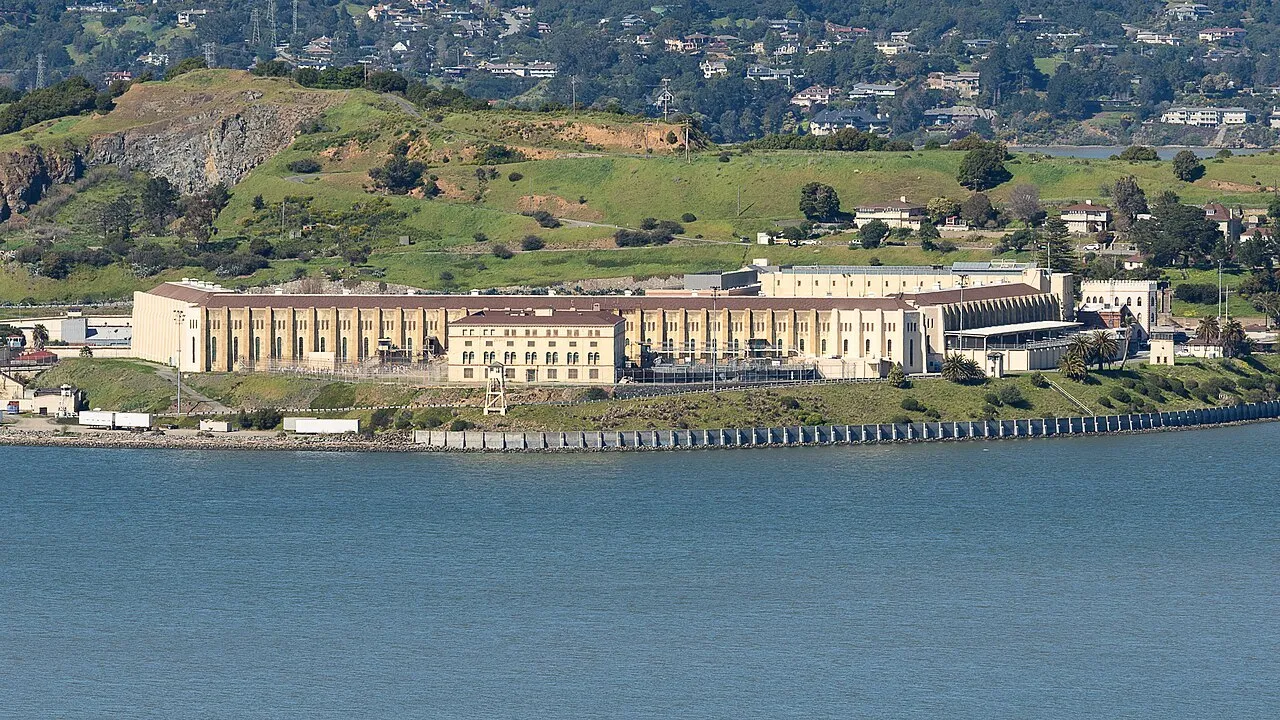
In an open letter published the same day, Newsom wrote that he believes "state-sanctioned killing is incompatible with California's values." He had already suspended executions in 2019, two months into his first term, when he withdrew the state's lethal injection protocol and closed the execution chamber at San Quentin.
A death row that had already stopped functioning
The numbers in the governor's own fact sheet describe a system that had ceased to operate long before it was dismantled. Of the 548 people under sentence of death — 529 men and 19 women — 29 are still waiting for an appellate lawyer to be appointed, and 376 are waiting for state habeas counsel to be appointed or funded.
Since Proposition 66 was approved ten years ago with the stated aim of speeding up executions by limiting appeals, five people have had counsel appointed, after an average wait of 29 years. Two hundred and twenty prisoners have waited 15 years or more for a habeas lawyer, and 139 have waited 20 years or more.
The fact sheet also states that 45 people would be immediately subject to execution were the moratorium not in place. California's last execution was carried out on January 17, 2006.
What still depends on the courts
The commutation does not take effect all at once. California law requires the state Supreme Court to review clemency for anyone convicted of more than one felony, and that covers roughly two-thirds of the death row population, according to the Death Penalty Information Center (DPI). The governor has submitted those cases to the court; the remaining third takes effect immediately.
That review is the one part of the decision the governor does not control, and it has no fixed deadline.
Nearly a third of the national death row
Because California held the country's largest death row, the effect reaches well beyond the state. The DPI calculates that the action reduces the number of people under sentence of death in the United States by almost 30 percent, leaving about 1,388 — the lowest figure since 1984.
Twenty-three states have abolished capital punishment outright. Since 1973, at least 203 people sentenced to death in the United States have later been exonerated, by the DPI's count. Eight of those exonerations came from California's death row, and all eight were men of color.
Public opinion has not moved as fast as the practice. A Pew Research Center survey from August found 66 percent of Americans in favor of the death penalty for murder, with about 73 percent acknowledging the risk that an innocent person could be executed.
$6 billion and 13 executions
California reinstated capital punishment in 1978 and has carried out 13 executions since, at an estimated cost of $6 billion, according to the DPI. Because the penalty was created by ballot referendum, only another referendum can repeal it — and voters narrowly rejected repeal in both 2012 and 2016.
That is the gap this decision exposes: the statute remains on the books, and the sentence can still be sought by prosecutors and imposed by juries. What Newsom removed is every sentence already handed down. His term ends in January 2027.
Reaction
Robin Maher, executive director of the Death Penalty Information Center, called the announcement "a decisive moment in the history of the death penalty in the United States." In the days before the decision, 50 relatives of murder victims signed a letter urging the governor to grant clemency to everyone on death row.
Jess Nichol, whose sister Polly Klaas was murdered in one of the state's most widely covered cases, said that whether her sister's killer is executed "has absolutely nothing to do with my recovery or with real public safety."
Reporting from the Office of the Governor of California, the Death Penalty Information Center, Al Jazeera, Democracy Now! and Just Security.