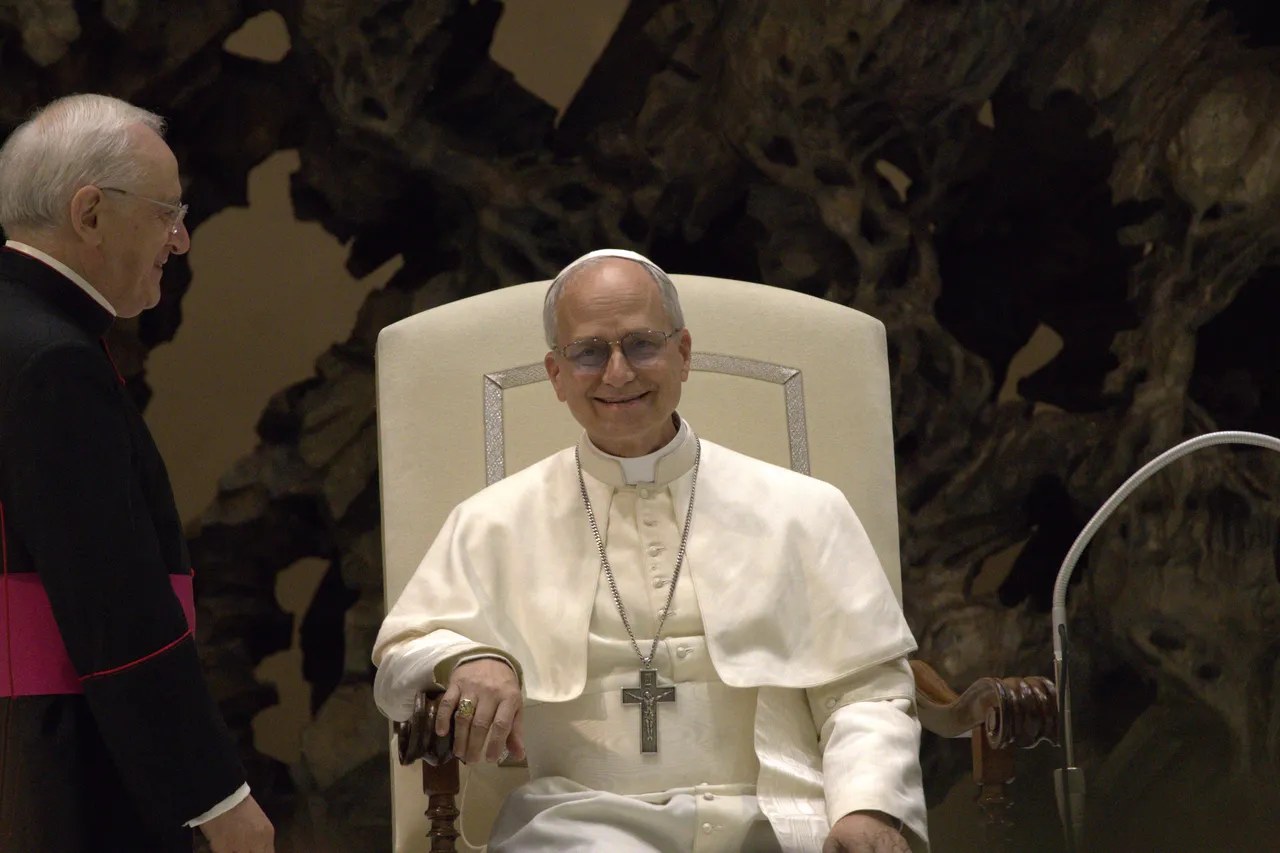
Pope Leo XIV landed on Friday, 6 November 2026 at Carrasco International Airport in Montevideo, at around 4.30pm local time, after a flight of some thirteen and a half hours from Rome. He is the second pope to visit Uruguay and the first in 38 years: the previous one was John Paul II, who was in the country in 1987 and 1988.
He was met at the foot of the aircraft by President Yamandú Orsi, alongside Foreign Minister Mario Lubetkin, the mayor of Canelones, Francisco Legnani, Uruguay's ambassador to the Vatican, Juan Raúl Ferreira, and Cardinal Daniel Sturla, the archbishop of Montevideo. The Uruguayan and papal anthems were performed by the Coro Nacional del Sodre (the national choir), the national youth orchestra and the national youth and children's choirs.
The first speech: coexistence, health and energy
The official welcome was held on the Plaza Independencia, Montevideo's central square, where the authorities expected between 60,000 and 80,000 people, with road closures from 8am.
In his first speech in the country, the pope said that "coexistence is part of the history of Uruguay" and praised the country's democratic life. Uruguay receives him as a state with a secular tradition — the most secular in the region.
Leo XIV called for access to health care to be guaranteed and dwelt on mental health, warning that "loneliness, anguish and the loss of hope can become so deep" that a person stops wanting to live, and stressing the need for support from families, communities and the health system. Uruguay has one of the highest suicide rates in South America.
He also restated Catholic doctrine against abortion, saying that "those not yet born already belong to human life and to the future of their people" — in a country where voluntary termination of pregnancy has been legal since 2012.
There was praise, too, for something concrete: he noted that Uruguay's energy mix "rests almost entirely on renewable sources" and called it "a remarkable result that has required decisions sustained over years".
Orsi, for his part, said it was "an honour to receive him in this region of the world, which is one of the few corners of the world without wars", and had written earlier that Uruguay welcomes the pope "from what we are: a country of secular tradition, with solid democratic institutions".
The schedule, day by day
After the ceremony, Friday's programme continued with a private meeting with Orsi at 6.15pm at the Edificio José Artigas, a visit to the Cabildo at 7pm and Vespers at the Metropolitan Cathedral.
On Saturday 7 the pope celebrates Mass at 10am in the Parque París Londres in Paysandú, a city on the Argentine border — the province of Entre Ríos has tightened controls at the crossings. Back in Montevideo, the schedule includes a visit to the Nuestra Señora de Guadalupe parish in Casavalle at 5pm, a meeting with the education sector at the Universidad Católica at 6pm and a prayer vigil at the Estadio Centenario at 7pm.
On Sunday 8 he visits Florida, home to the shrine of the Virgen de los Treinta y Tres (Our Lady of the Thirty-Three), the country's patron saint, and leaves for Buenos Aires at 3.30pm, due at Jorge Newbery airport at 4.30pm. On Monday 9 he celebrates Mass at the Monumento de los Españoles in Palermo, preceded by a roughly 2.3-kilometre popemobile route along Avenida del Libertador.
The tour ends in Peru, from 11 to 17 November, with Lima as his base and a stop in Chiclayo, in the Lambayeque region, where he served as a missionary and bishop for close to two decades.
A trip that was in doubt
The twelve-day journey is Leo XIV's first major trip after surgery for a lung tumour, weeks before departure. The Uruguayan Church considered postponing the visit until after January, but the schedule was left unchanged.
With information from Infobae, la diaria, Semana, El Litoral, Ámbito and El Argentino Diario.