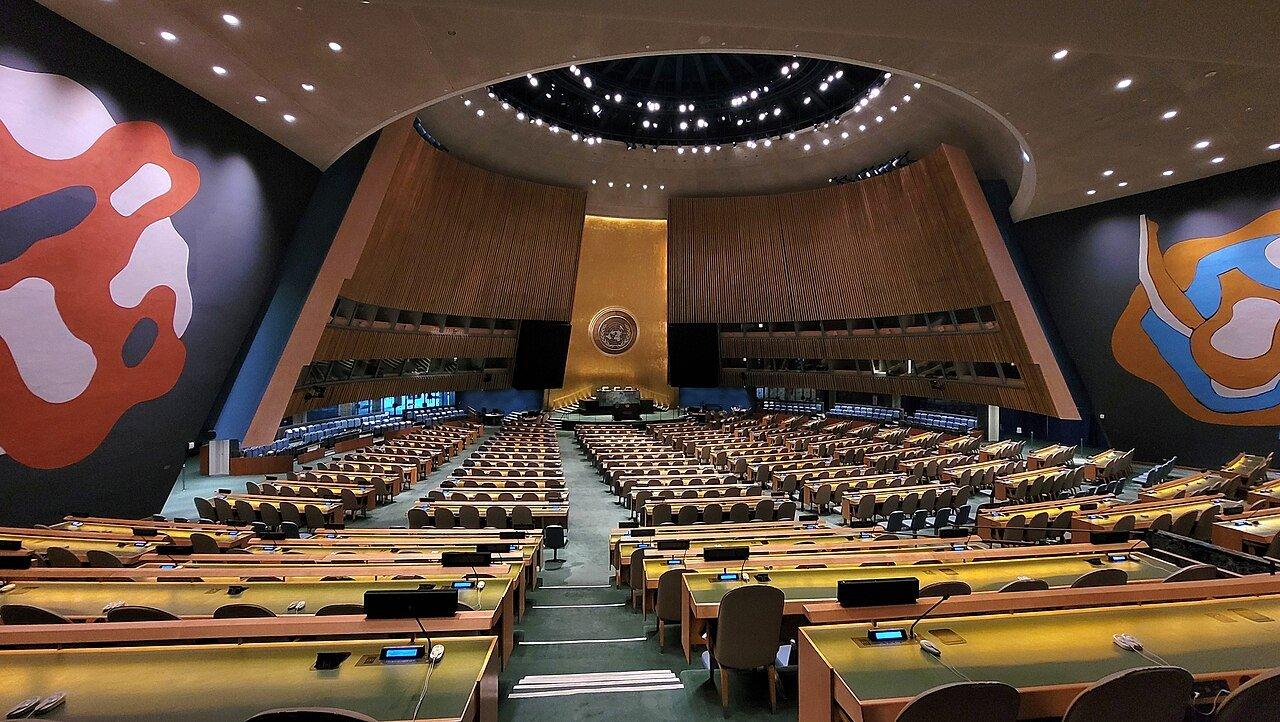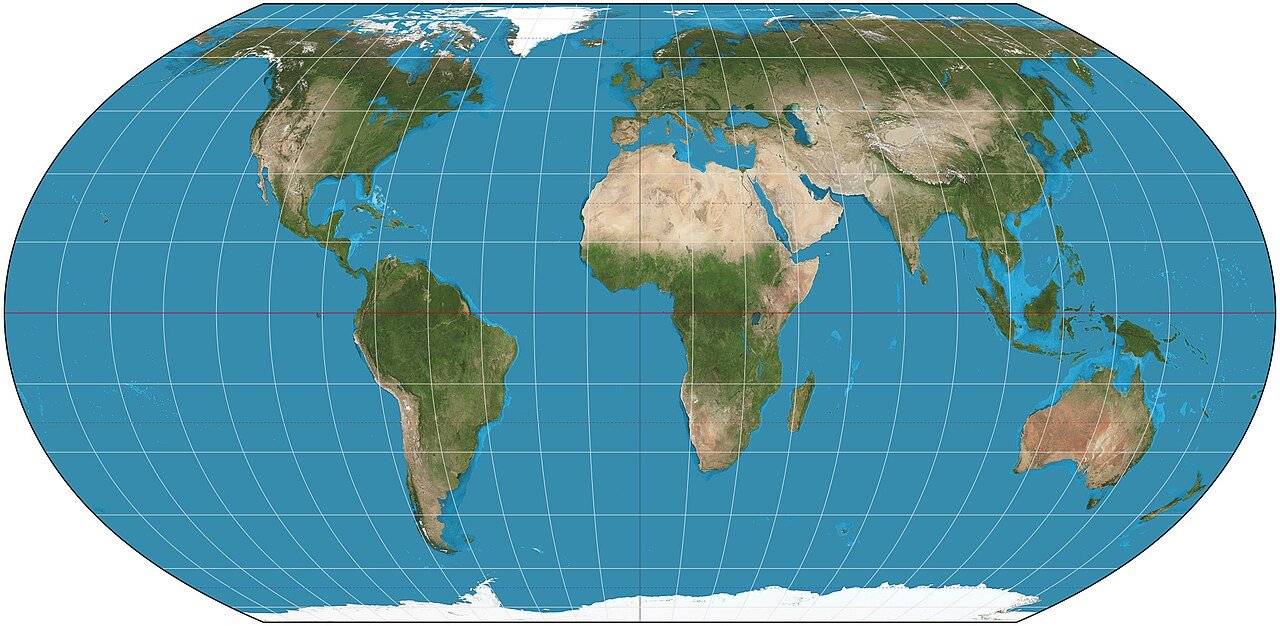
The United Nations General Assembly decided on Friday, September 4, to correct a distortion that has persisted for nearly five centuries: on the world maps most widely used around the globe, Africa, South America and South Asia appear smaller than they really are.
The proposal, titled "Correct the Map", was led by Togo together with other African countries. It received 164 votes in favor, six abstentions and one vote against, cast by the United States.
Where the distortion comes from
The Mercator projection, devised in 1569, was designed for navigation: it preserves angles, which helps anyone plotting a course, and distorts areas, which did not matter on board a ship. The problem is that it became the standard in school, news, digital and official materials.
The effect is systematic: landmasses far from the Equator appear enlarged, while those close to it appear shrunken. Since Africa, South America and South Asia lie mostly in the equatorial belt, the map much of the world carries in its head makes them look smaller.
For African countries, this has perpetuated "an unbalanced view of the world".
What the sponsors say
"The adoption sends the message that the General Assembly believes in scientific truth," Togo's foreign minister, Robert Dussey, said before the vote. In his view, the decision strengthens fairness of representation and the dignity of peoples, and it is not just about correcting a map but about correcting perception.
The adopted text holds that the correction provides "cognitive justice and memorial reparation".
The proposed projection
The African Union put forward the "Equal Earth" model as the projection that would most accurately represent the size of every continent. The UN hopes the resolution will encourage governments, international organizations and other entities to adopt it.
The African Union argues that maps are an educational, scientific and cultural tool that "shapes the perception of the world and the collective imagination of peoples", and that distortions have cognitive, educational, cultural, geopolitical and socioeconomic impacts.
The UN also recalled that the Pact for the Future, adopted by member states in 2024, stressed the need to eliminate the vestiges of historical and structural inequalities.
With information from Agência Brasil. Original report by Luiz Claudio Ferreira, published on September 5, 2026.