Venezuela's Ministerio de Economía y Finanzas (Ministry of Economy and Finance) put the country's public-sector debt at USD 237.544 billion as of the end of 2025, equivalent to 242% of that year's nominal GDP. The figure appears in the Plan Venezuela Renace, a 186-page document released on 24 November that sets out the government's macroeconomic framework and a debt sustainability analysis.
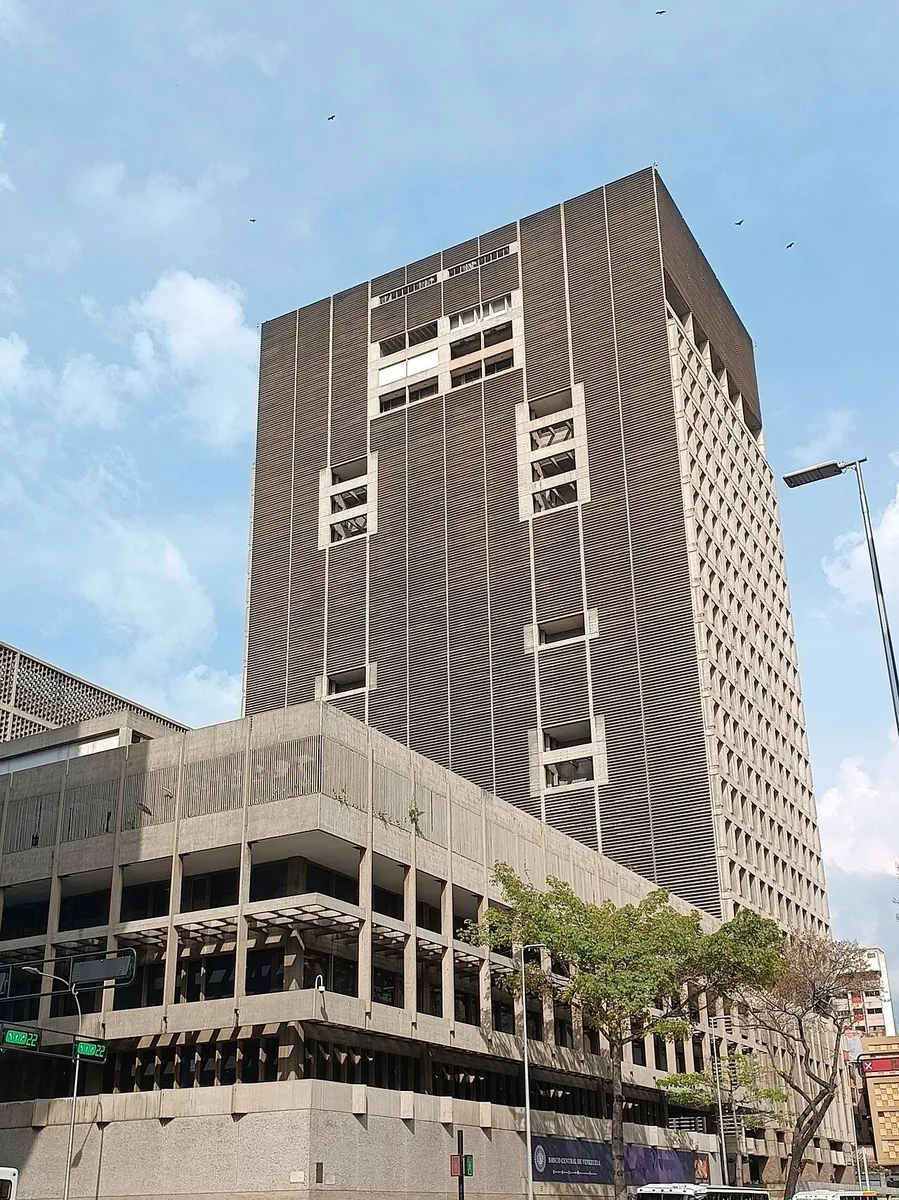
It is the first official inventory of liabilities the Venezuelan state has published in years. The last comparable figure came from the Banco Central de Venezuela (BCV), the central bank, in 2019, and stood at USD 129 billion; the institution stopped publishing those series after that date, and in the interval private estimates ranged between USD 150 billion and USD 170 billion.
The document itself describes the position as one of "prolonged default" and "unsustainable".
The six components of the total
The inventory splits the USD 237.544 billion into six broad categories:
- Bonds issued by the Republic, Pdvsa and Elecar: USD 110.134 billion (46.4% of the total). Of that, USD 45.939 billion is unpaid interest accumulated since 2017, when Venezuela stopped servicing its bonds. By issuer: the Republic, USD 64.976 billion; Pdvsa, USD 44.082 billion; Elecar, USD 1.077 billion.
- Pdvsa's non-financial liabilities: USD 67.282 billion, split between suppliers (USD 17.097 billion), joint-venture partners (USD 10.834 billion), promissory notes (USD 4.310 billion), promissory notes held by the BCV itself (USD 25.299 billion) and pension obligations (USD 6.209 billion).
- Arbitration awards: USD 26.288 billion, of which USD 13.799 billion is owed to ConocoPhillips across three awards. Crystallex, Gold Reserve, Rusoro Mining and Agroinsumos Iberoamericanos also appear.
- Bilateral debt: USD 23.262 billion, with the China Development Bank as the largest creditor (USD 16.866 billion), followed by Russia through Vnesheconombank (USD 5.080 billion) and Brazil through the BNDES (USD 1.128 billion).
- Commercial bank loans: USD 6.415 billion.
- Multilateral institutions: USD 4.163 billion, including USD 2.735 billion to the Inter-American Development Bank (IDB) and USD 1.423 billion to CAF.
By sector, Pdvsa accounts for USD 116.279 billion (49% of the total) and the central government for USD 103.322 billion (43.5%); the remainder is split between Bandes (USD 16.866 billion) and Elecar.
How much of it is owed to the state itself
A footnote in the plan introduces a distinction that changes the scale of the problem with outside creditors: USD 35.042 billion of Pdvsa's debt is held by other Venezuelan public entities — BCV promissory notes and certificates, Bandes and the workers' pension fund. Stripped out, the total falls to roughly USD 202.5 billion, or 206% of GDP. The government also notes that listing a liability in the inventory does not amount to recognising it legally.
The denominator matters too. The 2025 nominal GDP used in the plan is USD 98.1 billion, with GDP per capita of USD 3,445 for a population of 28.5 million. In real terms, the Venezuelan economy is now 36% the size it was in 2012, when nominal GDP stood at USD 366.5 billion. That contraction is why the percentage comes out so high: the International Monetary Fund (IMF), in its April 2026 Fiscal Monitor, estimated 308.7% of GDP working from an even smaller economy of around USD 82.8 billion. The Fund no longer publishes its own figure for the country.
Measured against the GDP the plan projects five years out — USD 200.9 billion — the debt would come to roughly 118%.
The road to a restructuring
The release is the step the IMF and creditors had been waiting for since May. On 13 May 2026 the government announced a restructuring of the Republic's and Pdvsa's external debt and hired Centerview Partners as financial adviser, committing to deliver a sustainability analysis in June; it arrived five months later, with the 24 June earthquakes in between. The IMF and the World Bank resumed relations with Caracas on 16 April, and the IDB on 24 June.
The country is governed by Delcy Rodríguez, interim president since US forces captured Nicolás Maduro on 3 January. Rodríguez ran for years the same ministry that is now publishing the figures.
The vice-president for the economy, Calixto Ortega, declined to comment on the headline total but said of the multilaterals that "we are in advanced discussions to settle the existing arrears with some of them". Those claims — USD 2.735 billion to the IDB and USD 1.423 billion to CAF — fall outside the restructuring, because multilateral institutions are paid first; the World Bank is waiting on that payment to unlock loans of up to USD 5 billion. An IMF spokesperson told Reuters it "would be premature to comment on specific details at this stage".
Among analysts, the point in dispute is how much of the inventory will actually reach the table. Francisco Rodríguez, of the University of Denver, attributes some USD 70 billion of the gap with market estimates to dollar promissory notes issued under Venezuelan law between 2019 and 2025, which in his view should be heavily discounted in a negotiation. Economist Jesús Palacios Chacín argues the USD 35.042 billion of domestic debt should be handled separately from external creditors. Alejandro Werner, of the Peterson Institute and a former director of the IMF's Western Hemisphere department, warns that without an IMF sustainability analysis as arbiter, bondholders could secure a better deal at the population's expense.
The plan projects 5% growth in 2026 and real average growth of 6.3% a year between 2026 and 2036, with crude output rising from around 1.2 million barrels a day to 2.9 million by 2036, and year-end inflation falling from 309% this year to 72% in 2027.
With information from Infobae, El Estímulo, Portafolio and Euronews.