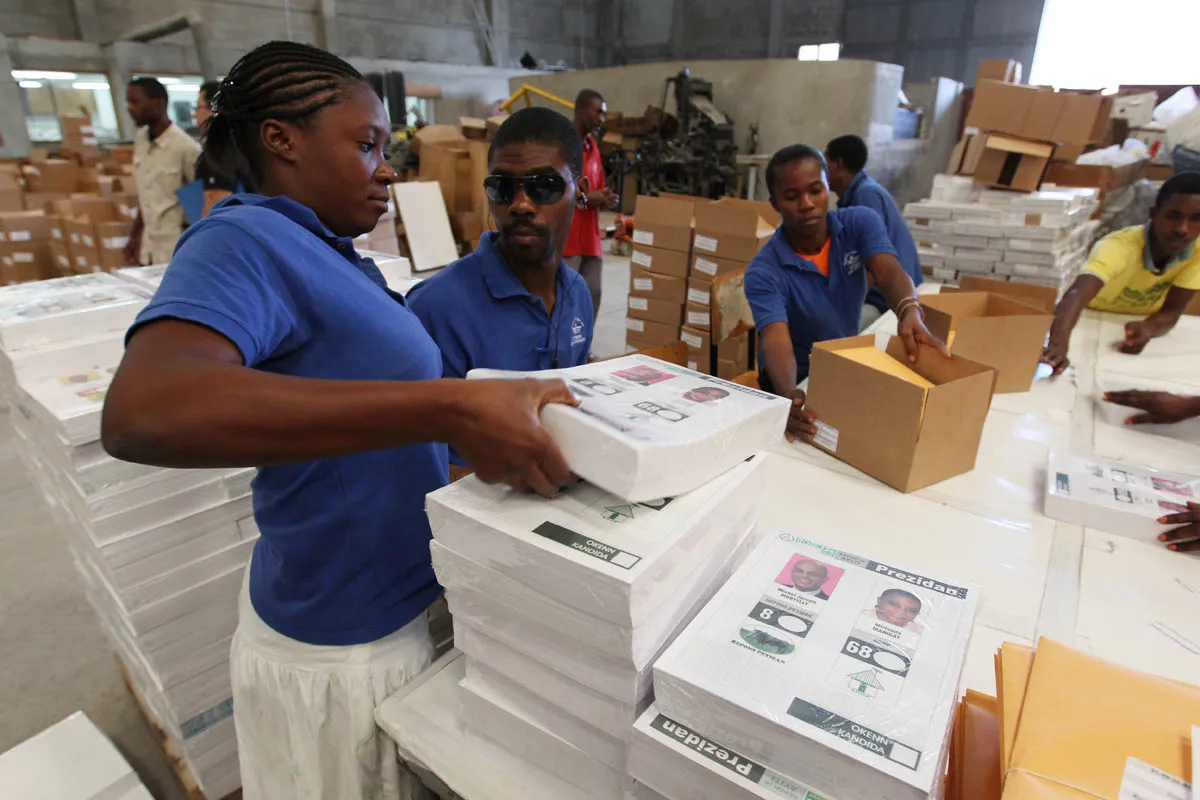
Women account for 221 of the candidacies filed as of Monday for Haiti's next general elections, 9.1% of the total and far short of the 30% set by the electoral decree of 6 October. The figure was reported by the Haitian newspaper Gazzette Haïti and picked up by the news agency Prensa Latina.
The decree sets that 30% as a legal floor for women's candidacies for the presidency, the Senate and the Chamber of Deputies, with the declared aim of narrowing the gap in women's access to those offices. According to Gazzette Haïti, the electoral authorities' registers "reveal a persistent imbalance between the two sexes", working against the legal measures meant to encourage broader representation.
Three women among 34 presidential candidacies
The Conseil Électoral Provisoire (CEP, Haiti's provisional electoral council) registered 34 candidacies for the presidency. Three of them are women's: Dominique Dupuy, Martine Moïse and Marie-Anne Savannah Hadid Savary.
In the Senate race there are 535 registered candidacies, 79 of them women's, or 14.8% — the best showing of the three contests. In the Chamber of Deputies, 139 of 1,855 candidacies are women's, or 7.5%.
The three contests add up to 2,424 candidacies, 221 of them women's. The pattern runs opposite to the size of the race: the quota comes closest to being met where there are fewest seats, and falls furthest short in the chamber that hands out the most. Prensa Latina notes that the numbers contradict the figures defended by the CEP, which maintains measures to promote women's political participation. No official of the body was named.
Voting is scheduled for 18 July; the same dispatch refers to the process as "the 2027 elections".
What the decree envisaged, and where things stand
The draft electoral decree went as far as tougher mechanisms: its article 138 rejects any list with fewer than 30% women, and article 138.1 creates an additional fund for parties whose candidacies are more than 50% women, according to the news site HaitiLibre.
The same site sets out the current picture: women hold 22.22% of government posts and 11.11% of the seats on the Conseil Présidentiel de Transition (CPT, the presidential transitional council), where they have observer status and no vote. In the electoral machinery at departmental and municipal level, they make up 27% of staff.
The CEP and UN Women launched a national campaign in Port-au-Prince with about 150 participants from the country's ten departments, including 63 women who live outside the capital. A national conference on women's political participation and electoral violence produced the Declaration of Haitian Women for Active and Effective Participation.
The process arrives in the middle of the transition opened in July 2021, with the constitutional review suspended by the transitional authorities and the referendum abandoned.
With information from Prensa Latina, Gazzette Haïti and HaitiLibre.