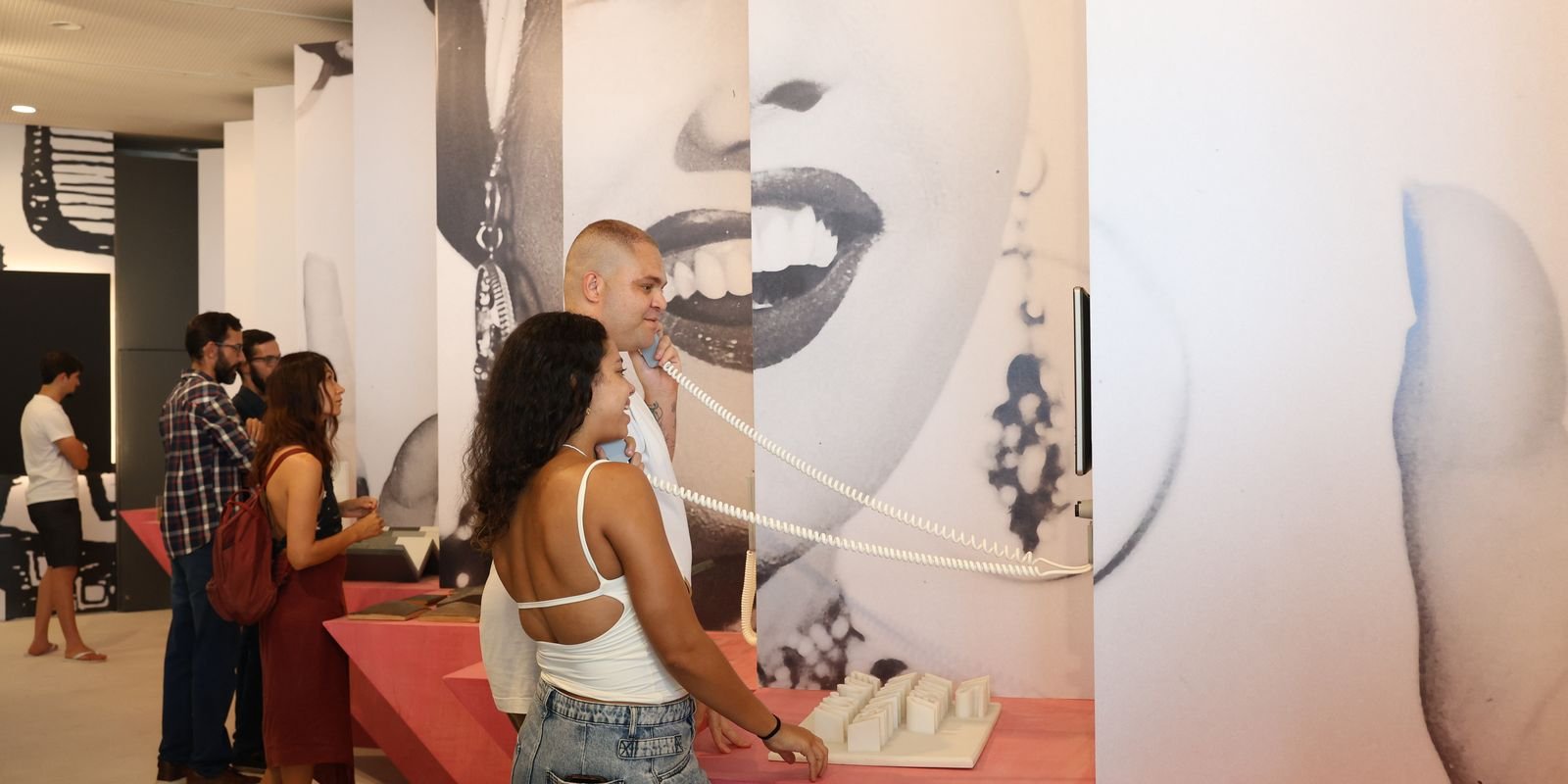
The Museu da Imagem e do Som (MIS, Rio's Museum of Image and Sound) has partially opened to the public on Avenida Atlântica, in Copacabana, after almost twenty years of design, construction and stoppages.
The opening exhibition has an unusual subject: the building itself. Arquitetura em cena — o MIS Copa antes da imagem e do som (Architecture on Stage — MIS Copa Before Image and Sound) shows the construction process and previews what the complex will be once it is finished, which is scheduled for the first quarter of next year.
A boardwalk standing upright
Design work on the building began in 2008, after an international competition held by the Fundação Roberto Marinho (a Brazilian cultural and educational foundation) with support from the Secretaria estadual de Cultura (Rio de Janeiro State Department of Culture). The winner was the American firm Diller Scofidio + Renfro.
The central idea was to turn Copacabana's boardwalk into a "vertical boulevard". "The winning firm understood how important the street is to the people of Rio," explains Larissa Graça, heritage and culture manager at the foundation and co-curator of the exhibition with Ana Paula Pontes. "They propose making the boardwalk vertical, turning it into this staircase that becomes a great lookout over the most famous beach in the world. A very democratic project."
What is open
The exhibition occupies the ground floor and the mezzanine, with models, videos, sketches, prototypes and records of the construction work. The route runs from the architectural concept to the technical challenges — among them a 280-seat auditorium buried about ten meters deep, close to the sea.
"The building, still in the final stages of construction, can already show the public that it is possible to come in and get to know the architecture here on the ground floor and the mezzanine," says Larissa.
Three phases and a crisis
The work had three stages. The first included the demolition of the old building of the Help nightclub, in 2010. The second, covering foundations and the concrete structure, ended in 2014. The third, covering installations and finishes, was halted in 2016, during Rio's fiscal crisis, and only regained momentum recently.
"The history of the MIS's construction reflects the recent history of Rio, all the difficulties it has been through, the post-pandemic period and its impacts," says the curator.
Funding combines public and private resources. Almost half of the investment required comes from partnerships, including through the Lei Rouanet (Brazil's federal cultural incentive law).
For the state Secretary of Culture and Creative Economy, Danielle Barros, the opening is a symbolic milestone of the recovery: "An enormous joy. Today we are opening an exhibition that tells the story from the selection in the architecture competition up to this moment."
What is to come
The museum will house more than one million items, including collections linked to photographer Augusto Malta, to Carmen Miranda and to Pixinguinha.
The floors will host experiences dedicated to the carioca spirit, Brazilian music, the career of Carmen Miranda, the city's relationship with the sea and its nightlife. The basement will house the "Noites Cariocas" (Rio Nights) space and the history of funk. The rooftop terrace serves as a lookout and open-air cinema.
There will also be a panoramic restaurant, a café, a shop, educational spaces and research areas.
The 93-year-old visitor
Among the first visitors was Marta Azambuja, a 93-year-old art teacher from Rio Grande do Sul who lives in Copacabana. "I couldn't wait for the opening, and today I'm thrilled," she said. She says she has traveled widely and has never seen a museum so integrated into the landscape: "I have never come across a museum as different as this one, integrated with nature."
For Larissa Graça, following the project since the competition has become something personal: "Delivering this museum to the public is the mission of my life. I was pregnant during the architecture competition. My daughter is 16 today. The history of the MIS coincides with the history of my motherhood."
Visitor information — Arquitetura em cena: o MIS Copa antes da imagem e do som. Museu da Imagem e do Som, Avenida Atlântica, Copacabana. Visits by advance booking only.
With information from Agência Brasil. Original report by Anna Karina de Carvalho, published on May 8, 2026.