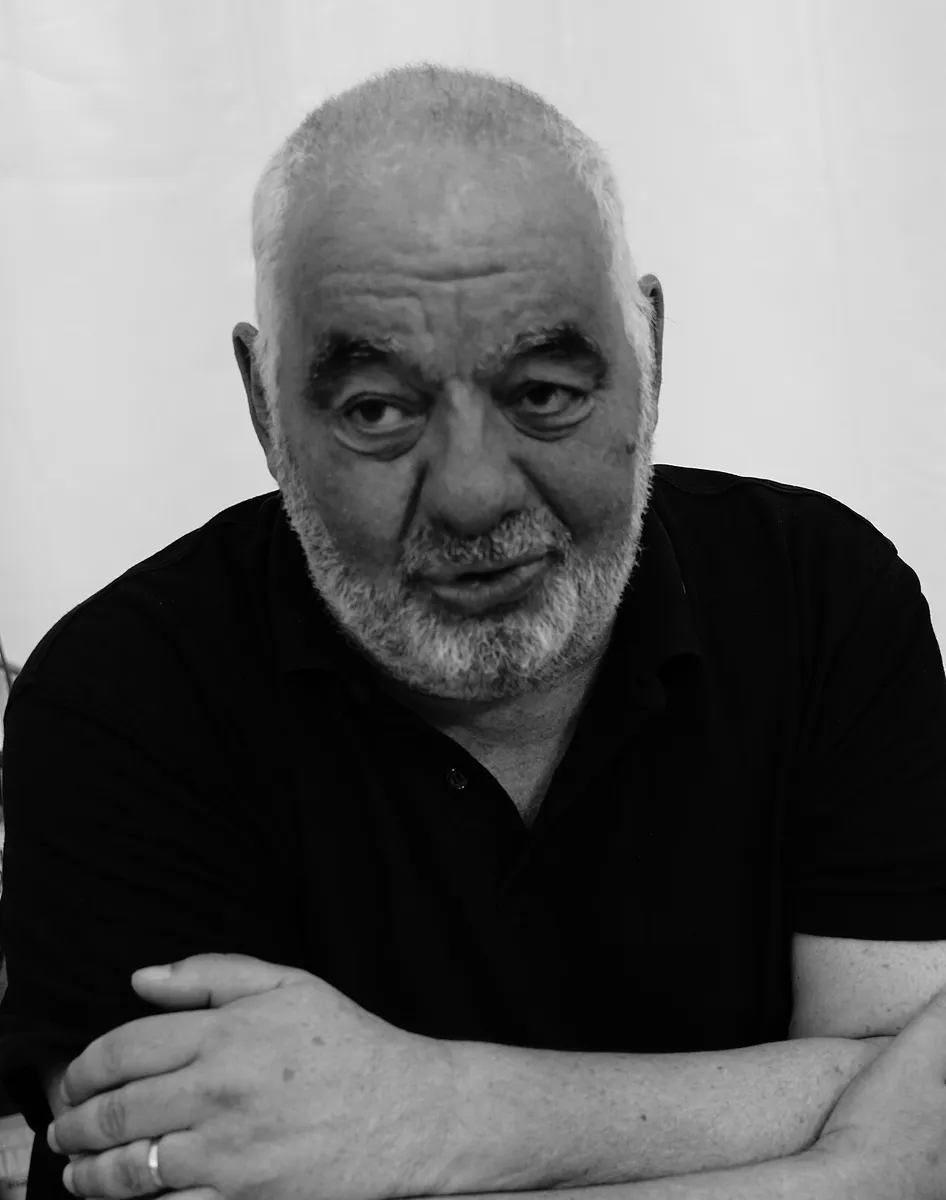
The Prix Goncourt, France's most important literary prize, went on 3 November to Philippe Jaenada, 62, for "L'Inconnue du quai de Javel" ("The Unknown Woman of the Quai de Javel", published by Flammarion on 12 August). He won in the first round of voting, by six votes to three, at the Drouant restaurant in Paris, where the Académie Goncourt has announced its winner since the early twentieth century.
The runner-up in the final vote was Sylvain Prudhomme, with "De l'autre côté du lac" (Minuit). Also on the final shortlist were Yannick Haenel ("La solitude des professeurs est infinie", Flammarion) and Clémentine Mélois ("Choses que je croyais perdues", L'Arbalète/Gallimard). The Goncourt pays its winner a symbolic cheque for €10 — what the prize really guarantees is the print run.
Jaenada succeeds Laurent Mauvignier, the 2025 winner. He has built his career on unsolved criminal cases: "Sulak" (2013), "La Petite Femelle" (2015) and "La Serpe" (2017). The winning book reconstructs the murder of Louise Cansot, an artist's model killed in Paris in 1949 in a crime that was never solved.
The three times
A day after the announcement, in an interview with the radio station France Inter, Jaenada said he had used artificial intelligence at three points while writing:
- he inserted into the text a sentence written by ChatGPT, in his words to "play with the reader" — and disclosed that the sentence existed only to the jurors, on the Tuesday of the announcement;
- he turned to the tool to mock the absurd answers it gave him about a technical detail;
- he used it for technical research.
"I don't think AI can be held back. We can't pretend it doesn't exist," the writer said, adding that the machine "will never be able to write a book with its heart, its soul, its memories." Before receiving the prize he had already summed up his position with a comparison: "Would a film director hide the fact that he uses special effects?"
The Académie Goncourt, chaired by Philippe Claudel, was approached by the press and did not comment on Jaenada's case.
The precedent that hardened the season
The admission does not land on neutral ground. In September the same academy removed from contention the debut novel of Haitian-Canadian author Thélyson Orélien, "C'était ça ou mourir", which had already sold more than 35,000 copies and won the Prix du roman Fnac. In a statement on 25 September, the Académie said the book was "in all likelihood very largely the product of an artificial intelligence", and said it wanted to send "a clear message" against texts generated with machine help.
The suspicion came from journalist Samuel Fitoussi, who ran the text through the detection tool Pangram, whose result pointed to automated generation across much of the book. The accuracy of such software is contested. In October Orélien called the accusations "slander and heresy" and said "not a single sentence in this book was created by a machine", though he acknowledged plagiarism in earlier work. His Canadian publisher, Boréal, later ended its relationship with him and decided not to reprint the book.
The difference in treatment between the two cases became an argument on French social media, with accusations of a double standard — on one side an established author who declares the use and wins the prize; on the other a debut novelist excluded on suspicion. What separates the cases, by the academy's own account, is scale: one declared sentence in one instance; an entire book attributed to the machine in the other.
With information from Euronews, Livres Hebdo and the PA news agency, as well as the Académie Goncourt's statement of 25 September.