Israel has entered the decisive phase of its government negotiations. On 8 November, President Isaac Herzog tasked former military chief of staff Gadi Eisenkot, leader of the Yashar party, with forming the next cabinet: 67 of the 120 lawmakers recommended him, against 46 who backed Prime Minister Benjamin Netanyahu. Under Israeli law, Eisenkot has 28 days — until 6 December — and Herzog may extend the deadline by a further 14, to 20 December.
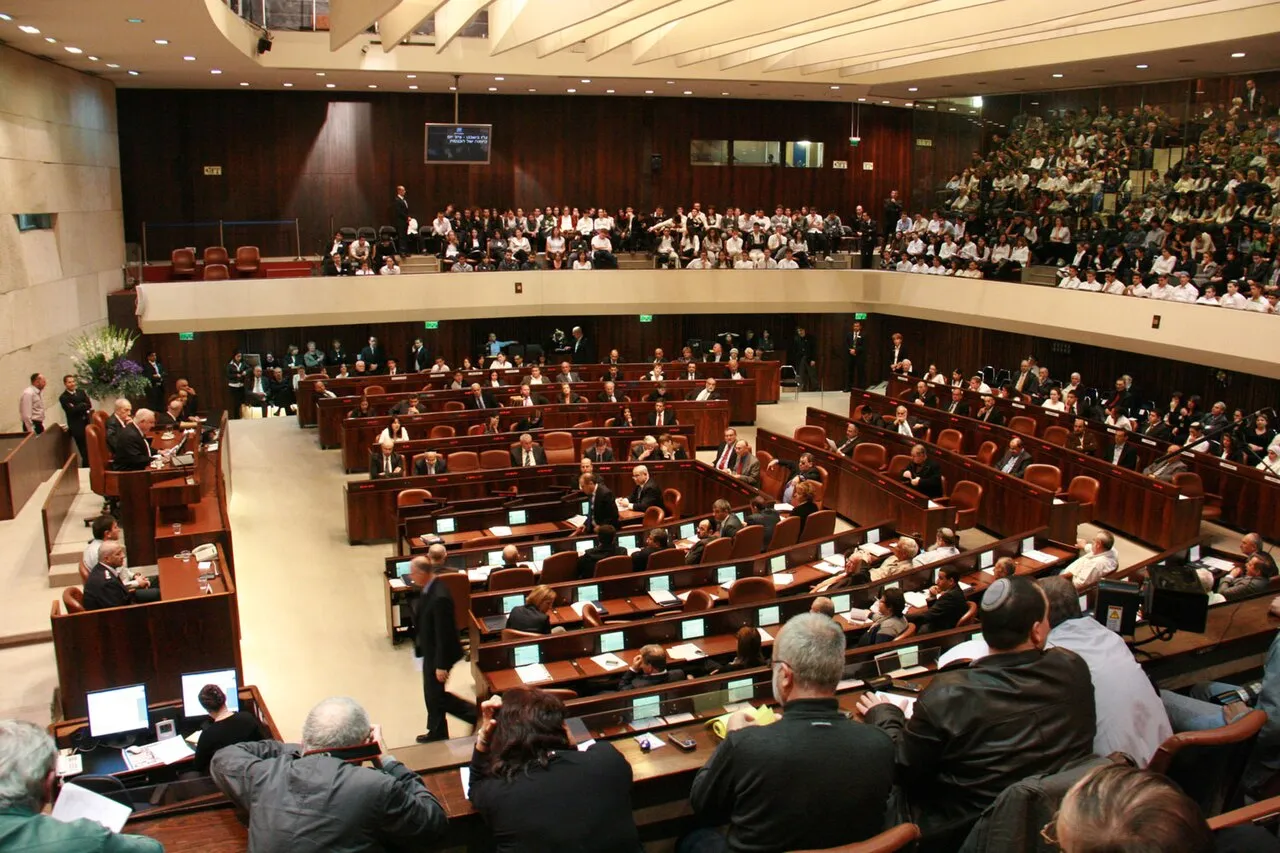
The 26th Knesset (Israel's parliament) was sworn in on Tuesday, 10 November, two weeks after the election of 27 October. All 120 members took the oath, among them 47 newcomers and 33 women.
Neither side has 61
The arithmetic explains the difficulty. The bloc backing Netanyahu holds 53 seats; the bloc seeking to replace him, 48. Neither reaches the 61-seat majority.
- Likud, Netanyahu's party: 27 seats, the largest single faction
- Yashar, Eisenkot's party: 21
- B'Yachad, led by Naftali Bennett and Yair Lapid: 12
- Arab parties: 19 in total — 11 for the Joint List and 8 for Ra'am, the best result these lists have ever achieved
- Shas and United Torah Judaism (UTJ), ultra-Orthodox: 13
Yashar and B'Yachad have not merged, but their alliance gives Eisenkot the backing of 33 lawmakers at the negotiating table. Bennett, according to people close to him, chose to support Eisenkot's bid rather than seek the premiership himself — a decision that turned him into the kingmaker.
The shortest arithmetic path to 61 votes runs through the 13 ultra-Orthodox seats — an option openly favoured by Avigdor Liberman — and that is precisely where the bloc stalls. Eisenkot has set four conditions for any partner: Israel as a Jewish and democratic state, the values of the Declaration of Independence, national service for all, and the dismantling of Hamas's military and governing capability. Shas and UTJ have historically opposed drafting yeshiva students, while the first and fourth conditions alienate much of the Arab caucus, which so far supports the bloc on specific votes without joining it.
The parallel fight for control of the floor
While negotiating the cabinet, Eisenkot's bloc is moving to take control of the legislative agenda. On Wednesday, 11 November, the bloc's 48 members and the 19 from the Arab lists elected Roy Folkman, of Yashar, as chair of the Arrangements Committee, which allocates committee posts at the start of a term.
The next step is set for 17 November: the vote expected to replace Amir Ohana, of Likud, as Knesset speaker. The choice is Matan Kahana, a Yashar member, former minister and former fighter pilot, preferred by Eisenkot over Lapid with the agreement of the bloc's other leaders.
That choice, however, complicates talks with the ultra-Orthodox. As religious services minister in the Bennett-Lapid government in 2021 and 2022, Kahana opened kashrut certification to competition, allowed municipal rabbis to convene conversion courts and added women to local religious councils — measures Shas had repealed in July 2026. During that fight, Moshe Gafni, of UTJ, shouted "Antiochus!" at him on the floor. Kahana also argues that everyone must enlist and that those who refuse should receive nothing from the state.
The bloc intends to use the committees to open a state commission of inquiry into the 7 October 2023 attack and to repeal parts of Netanyahu's judicial overhaul, as well as to pass term limits for the prime minister. Each step, however, requires its own majority.
The speech that soured the talks
The swearing-in was tense. Herzog urged lawmakers to avoid another election, saying Israelis are "thirsty for routine, security, and tranquility". Netanyahu used his speech to say Iran is working to rebuild its nuclear threat and to call for a national unity government, attacking the prospect of a cabinet dependent on Arab votes. Bennett interrupted him to demand answers about advisers with ties to Qatar and about the inquiry into 7 October. Itamar Ben-Gvir disrupted the oath of Joint List leader Yousef Jabareen; the caucus walked out during the anthem.
Eisenkot called Netanyahu's speech "delusional, divisive, hate-filled and shameful", said the prime minister is "unfit to remain in office for even one more minute" and cancelled the meeting he was due to hold with Likud on Wednesday. Netanyahu kept pressing for national unity, including a rotation arrangement under which Eisenkot would serve first as prime minister and he would become alternate premier — a scenario there is no indication he would accept.
If Eisenkot fails to close a cabinet within the deadline, another lawmaker may receive the mandate; a second failure would send Israel to a new election. Until a government is formed, Netanyahu remains caretaker prime minister, which could stretch on for weeks.
With information from The Jerusalem Post and Fox News.