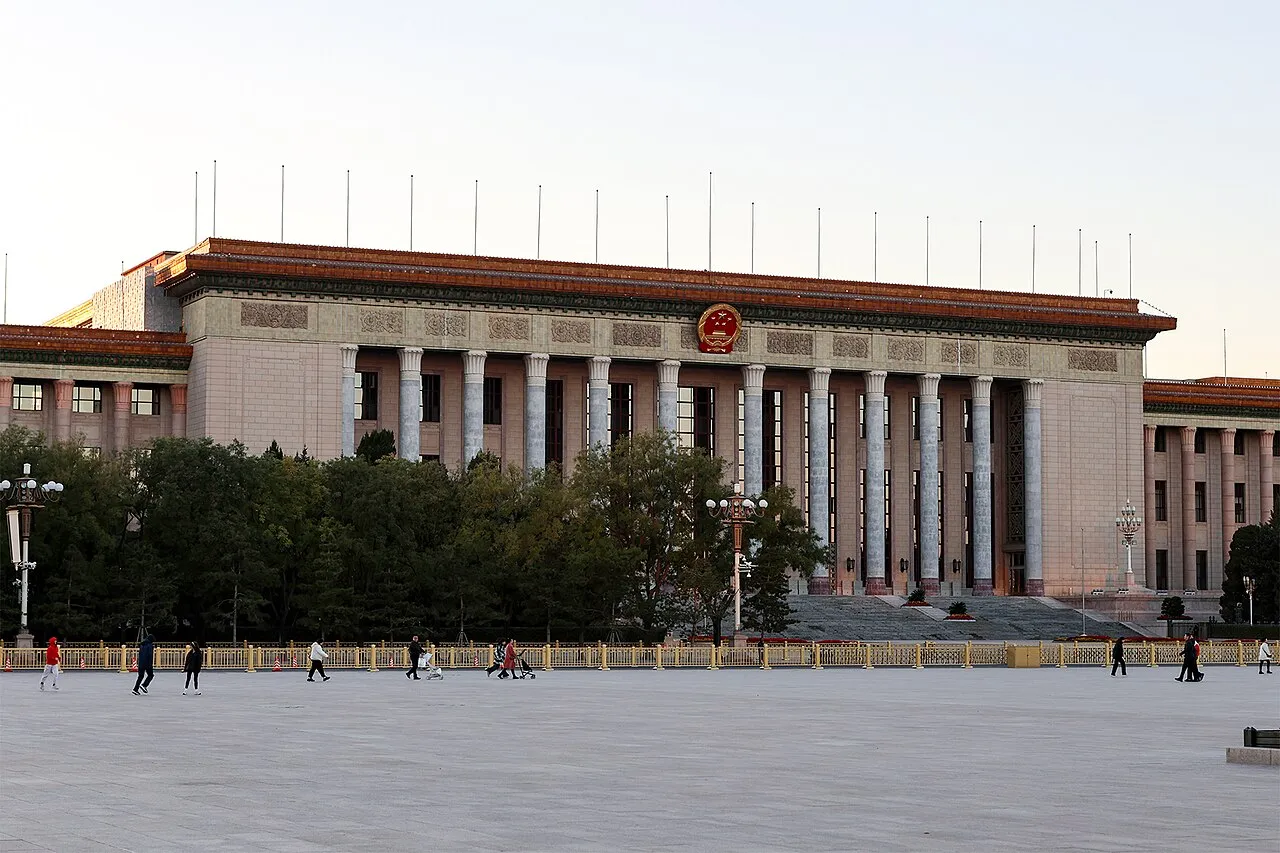
China's president, Xi Jinping, said on Thursday that "the complete reunification of the motherland must be achieved, and it will certainly be achieved", in a speech at the Great Hall of the People in Beijing before some 3,000 guests. The ceremony marked 160 years since the birth of Sun Yat-sen, who led the 1911 revolt that ended imperial rule and founded the Republic of China.
Xi described resolving the Taiwan question as a historic mission of the Communist Party and a requirement of what Beijing calls national rejuvenation. "The historical trends are unstoppable," he said. Senior leaders Li Qiang, Zhao Leji, Wang Huning, Cai Qi, Ding Xuexiang and Li Xi attended; Wang Huning presided over the event.
Dialogue, with a condition
Xi restated his readiness to pursue "peaceful reunification" under the "one country, two systems" formula, and said he was willing to talk to Taiwan provided the basis was the one-China principle and the so-called 1992 Consensus. According to the state news agency Xinhua, he added that the island's realities and the interests of its people would be taken into account.
At the same time, he hardened his tone towards the pro-independence camp: "we will never leave any room for 'Taiwan independence' separatist activities in any form". Xi did not mention the use of force — an option Beijing has never formally renounced in Taiwan's case.
Taipei's answer
Taiwan's Mainland Affairs Council rejected the offer. Spokesperson Liang Wen-chieh said the government and the public cannot accept "one country, two systems", a formula that, in his words, would mean submitting to Communist Party rule. Liang also noted that Xi's wording on unification "isn't much different from the past".
On the same day as the speech, Taiwan's defence ministry said it had detected 29 Chinese military aircraft — among them J-16 fighters and drones — on a "joint combat readiness patrol" around the island, accompanied by warships.
Two dates on the horizon
The speech landed in a tight stretch of the calendar. Taiwan holds local elections a little over two weeks later, and an APEC summit is scheduled for Shenzhen the following week, where Xi is expected to meet US President Donald Trump again.
In September, during a state visit to Washington, Xi urged Trump to show "prudence" over Taiwan and pressed the United States to oppose the island's independence. In May, Washington paused a $14 billion Taiwanese weapons purchase, a move Trump called "a very good negotiating chip" in dealings with China — a remark that fed fears in Taipei that the island's security could become a bargaining counter.
With information from Al Jazeera and Xinhua, via the Chinese government portal.