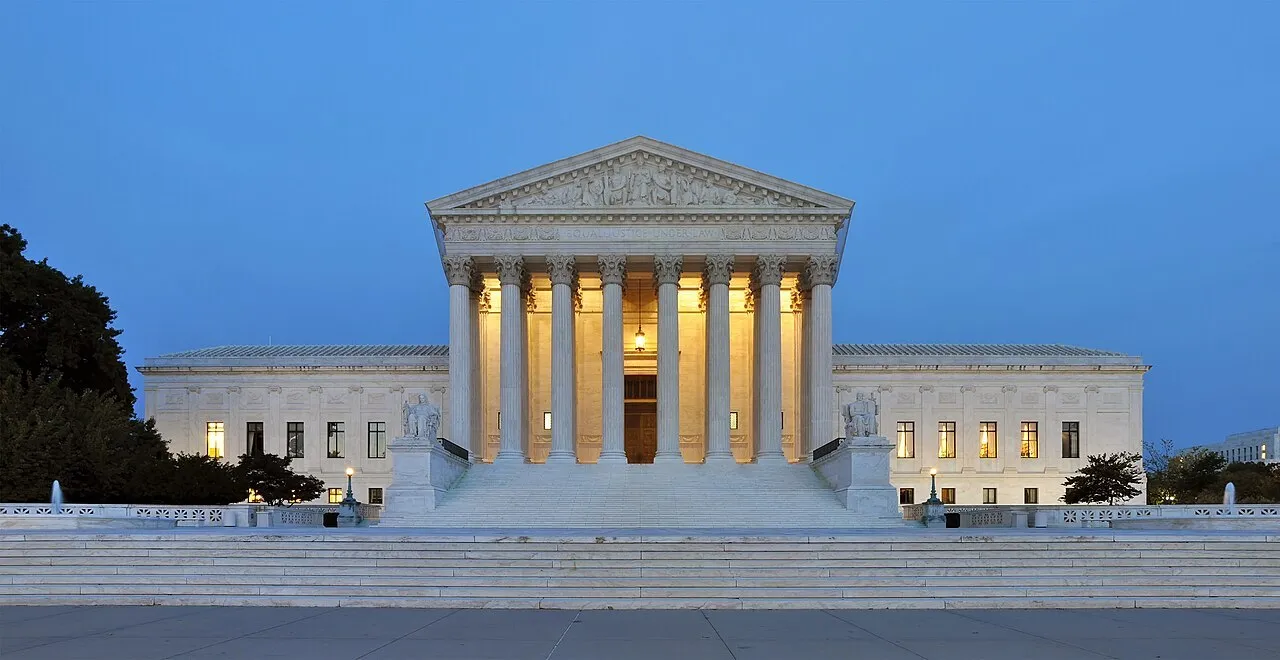
The Supreme Court said on Friday that it will decide whether a president can close the asylum system at the US-Mexico border by proclamation, taking up the signature immigration measure of President Donald Trump's second term after two lower courts ruled it unlawful.
The case is Mullin v. Refugee and Immigrant Center for Education and Legal Services, No. 26-239, and the justices granted it out of their November 13 conference. The lead petitioner is Homeland Security Secretary Markwayne Mullin; the lead respondent is the Texas legal-aid organization known as RAICES.
What the proclamation does
Proclamation 10888, which Trump signed on January 20, 2025, hours after returning to the White House, declares that the southern border is facing an invasion and suspends the entry of migrants crossing between ports of entry. Its implementing guidance goes further than entry: it instructs officials to deny those migrants access to asylum and to other protections written into the Immigration and Nationality Act, and to remove them through summary procedures rather than the hearings the statute lays out.
Federal law says a person who fears persecution may apply for asylum regardless of how they reached the country, while leaving the executive branch wide discretion over whether to grant it. The government's position is that the two can be separated — that it may categorically deny asylum to the people the proclamation covers, and that it should not have to accept applications it has already decided to reject. Administration lawyers argue that processing times stretching over years had themselves drawn migrants north, since most were released into the country while they waited.
Lawyers for the challengers, from the American Civil Liberties Union and the National Immigrant Justice Center, say the statute does not let a president unilaterally stop people from applying at all, and that the proclamation is an attempt to erase protections Congress wrote. They also note that crossings were already falling before Trump took office.
Two courts, one unchanged policy
District Judge Randolph Moss, in Washington, ruled against the proclamation on July 2, 2025, finding that the president had replaced the procedures Congress established with ones of his own. The US Court of Appeals for the District of Columbia Circuit upheld that conclusion in April 2026, holding that the administration had unlawfully cut off asylum access and invented removal procedures outside the federal immigration system, though it narrowed the relief.
Through all of it, the restrictions have remained in effect. That is the practical fact behind the second question the justices agreed to answer, which is not about the border at all: whether 8 U.S.C. § 1252(f)(1), a provision limiting courts' power over the operation of immigration law, bars a district judge from granting the kind of class-wide relief Moss ordered. A ruling for the government on that question alone would narrow what any single lawsuit can achieve against an immigration policy, whatever the Court says about the proclamation itself.
The term's third immigration case
The grant makes this the third major immigration case of the Court's current term. The others concern rapid deportation to third countries and detention without a time limit while removal proceedings run.
The justices have already dealt with the border this year. In June they ruled 6-3, in Mullin v. Al Otro Lado, that a non-citizen "arrives in the United States" under the Immigration and Nationality Act only on crossing the border — meaning someone stopped on the Mexican side is not entitled to apply for asylum or to be inspected. Justice Samuel Alito wrote for the majority; Justice Sonia Sotomayor dissented, joined by Justices Elena Kagan and Ketanji Brown Jackson.
Argument in the new case is expected in the coming months, with a decision by the end of June 2027.
Reporting from SCOTUSblog, PBS NewsHour, Law Commentary and Al Jazeera.